Gazpacho is a classic Spanish cold soup that celebrates fresh, raw vegetables at their peak.
Originating from Andalusia in southern Spain, this refreshing dish is especially popular during hot summer months when turning on the stove feels unbearable.
Light yet satisfying, gazpacho is packed with vibrant flavors, nutrients, and a silky texture that makes it both nourishing and indulgent.
Whether served as a starter, light lunch, or elegant appetizer, gazpacho proves that simple ingredients can create extraordinary results.
Gazpacho Recipe
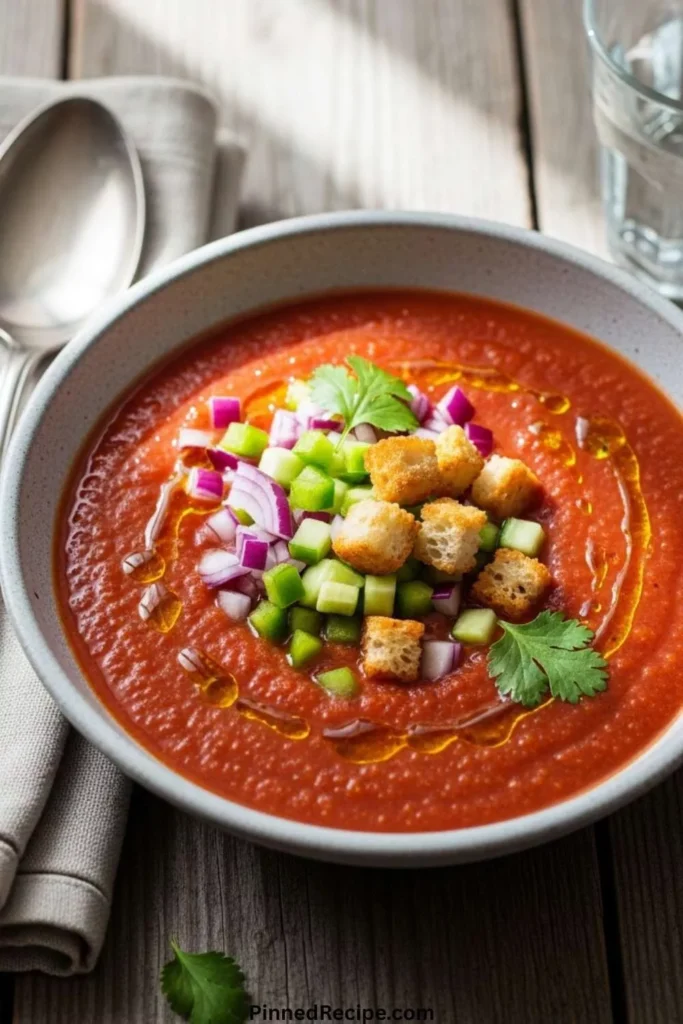
Gazpacho is a chilled tomato-based soup made by blending raw vegetables such as tomatoes, cucumbers, bell peppers, garlic, and onions with olive oil and vinegar.
Unlike cooked soups, gazpacho relies on the freshness and quality of its ingredients for flavor.
The result is a smooth, slightly tangy, and deeply refreshing soup with a balance of sweetness, acidity, and richness from olive oil.
It’s naturally vegan, dairy-free, and gluten-free, making it suitable for a wide range of diets.
Ingredients
To make a traditional gazpacho, you’ll need:
- Ripe tomatoes (Roma or vine-ripened work best)
- Cucumber (peeled and seeded)
- Red or green bell pepper
- Garlic cloves
- Red onion or white onion
- Extra virgin olive oil
- Red wine vinegar or sherry vinegar
- Day-old bread (optional but traditional, for body)
- Salt (to taste)
- Cold water (as needed, for consistency)
Optional garnishes:
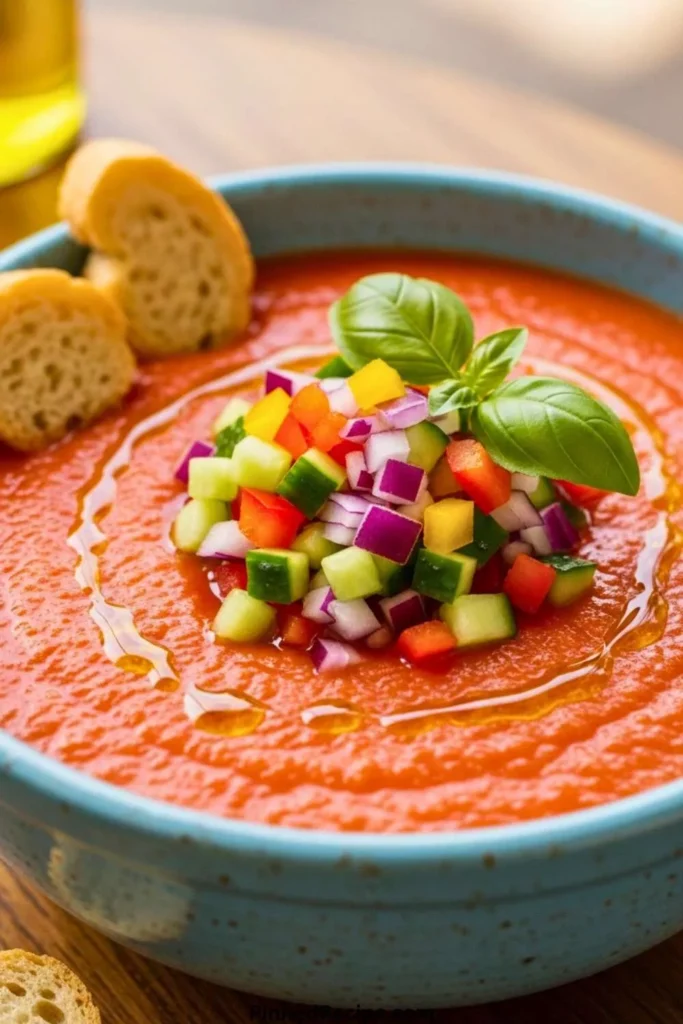
- Finely chopped cucumber or bell pepper
- Croutons
- Drizzle of olive oil
- Fresh herbs (parsley or basil)
Step-by-step Instructions
Prepare the vegetables
Wash all vegetables thoroughly. Core the tomatoes and roughly chop them. Peel the cucumber, cut it lengthwise, and remove the seeds for a smoother texture. Chop the bell pepper, onion, and garlic into manageable pieces.
Soak the bread (optional step)
If using bread, tear it into small pieces and soak it briefly in water until soft. Squeeze out excess water before adding it to the blender. This step adds body and creaminess to the gazpacho.
Blend the base
Add tomatoes, cucumber, bell pepper, onion, garlic, and soaked bread to a high-speed blender. Blend until completely smooth. Depending on your blender, this may take 1–2 minutes.
Emulsify with olive oil
With the blender running, slowly drizzle in the olive oil. This helps emulsify the soup, giving it a rich and silky texture rather than a watery consistency.
Season and balance flavors
Add vinegar and salt, then blend again. Taste and adjust seasoning as needed. If the soup is too thick, add cold water a little at a time until you reach your desired consistency.
Strain (optional but professional)
For an ultra-smooth, restaurant-quality gazpacho, pass the soup through a fine mesh strainer. This removes seeds and skins, resulting in a refined texture.
Chill thoroughly
Transfer the gazpacho to a covered container and refrigerate for at least 2–4 hours. Gazpacho tastes best when well chilled, as the flavors meld and intensify over time.
Serve and garnish
Stir well before serving. Pour into bowls or glasses and garnish with chopped vegetables, croutons, or a drizzle of olive oil.
Tips for the Best Gazpacho
The key to outstanding gazpacho lies in ingredient quality. Use fully ripe tomatoes for natural sweetness and depth of flavor.
Extra virgin olive oil should be fruity and fresh, as it significantly affects the final taste.
Always chill the soup long enough—lukewarm gazpacho lacks the refreshing character that defines the dish.
Tasting and adjusting seasoning after chilling is also important, as cold temperatures can dull flavors.
Variations and Flavor Twists
Gazpacho is incredibly versatile. You can add watermelon or strawberries for a sweet, summery twist, or avocado for extra creaminess.
For a spicy kick, blend in a small chili or a pinch of cayenne.
Some modern versions include roasted vegetables, but traditionalists prefer everything raw to preserve freshness.
Feel free to customize based on what’s in season or your personal taste preferences.
Serving Suggestions and Pairings
Gazpacho can be served as a starter, light meal, or even a refreshing drink in small glasses. It pairs well with crusty bread, grilled vegetables, seafood, or Spanish tapas like olives and patatas bravas.
For entertaining, serve gazpacho in chilled bowls or shot glasses for an elegant presentation.
Conclusion
Gazpacho is more than just a cold soup—it’s a celebration of fresh ingredients, simplicity, and Mediterranean tradition.
Easy to prepare, nutritious, and endlessly customizable, this gazpacho recipe is perfect for warm weather or anytime you crave something light and refreshing.
Once you master the basics, you’ll find yourself returning to this timeless dish again and again, experimenting with flavors while staying true to its refreshing roots.