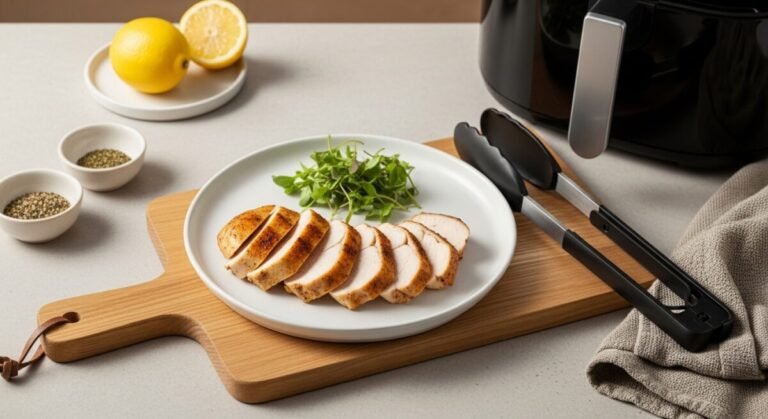
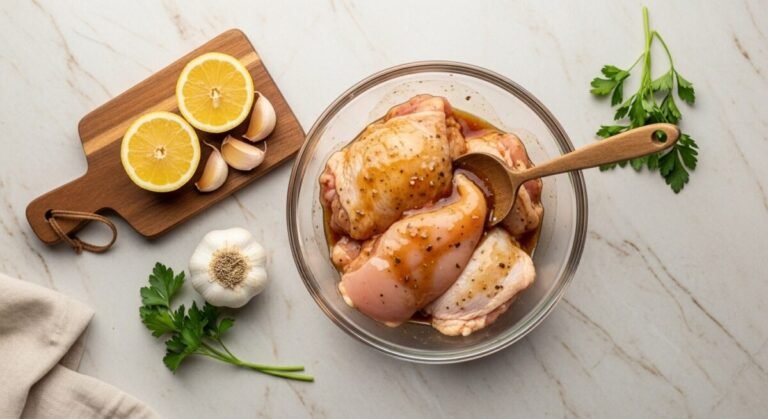
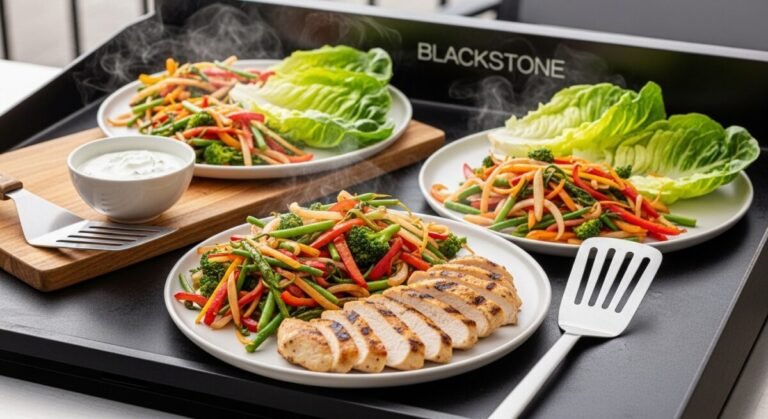
Diced chicken on a Blackstone sounds simple—until you end up with a mix of pale, steamy cubes and a few over-browned pieces. You want that even, golden color and juicy bite every time, without guessing.
This guide walks you through the exact heat, spacing, and timing that makes diced chicken cook evenly on a flat top. You’ll know what to look for at each step, so it turns out consistent and reliable.
How To Cook Diced Chicken On Blackstone
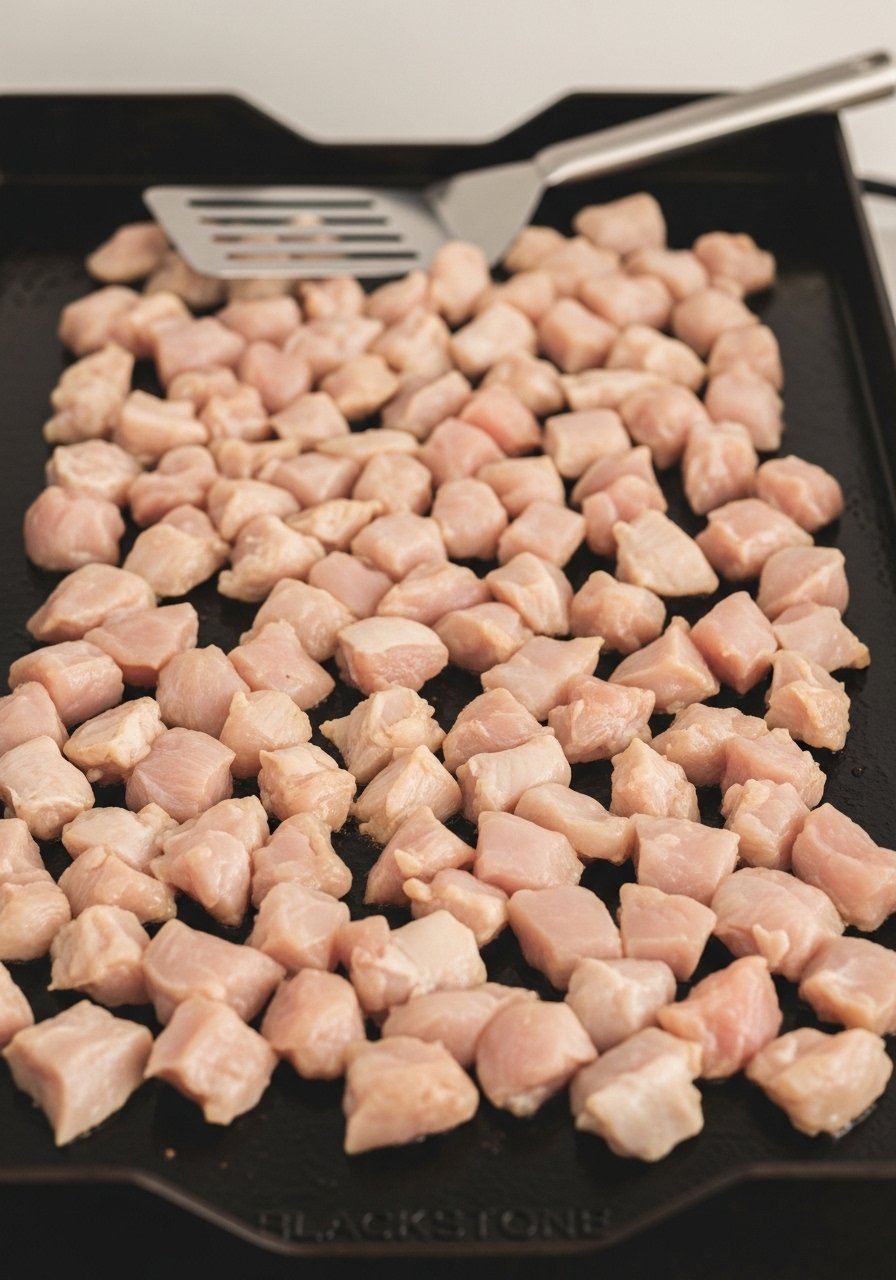
Evenly cooked diced chicken on a Blackstone means two things: consistent cube size and the right balance of heat and space. When the pieces are uniform and not crowded, they brown instead of steaming. The result is tender chicken with light crisping on the outside, fully cooked through, and ready to use however you planned.
Ingredients
- 1 ½ lb boneless, skinless chicken breast or thighs (cut into even ¾-inch cubes for consistent cooking)
- 1–1 ½ tbsp neutral oil (avocado or canola helps prevent sticking and promotes browning)
- 1 tsp kosher salt (season early for better flavor throughout)
- ½ tsp black pepper
- Optional: ½ tsp garlic powder (adds savory flavor without burning quickly)
Step-By-Step Instructions
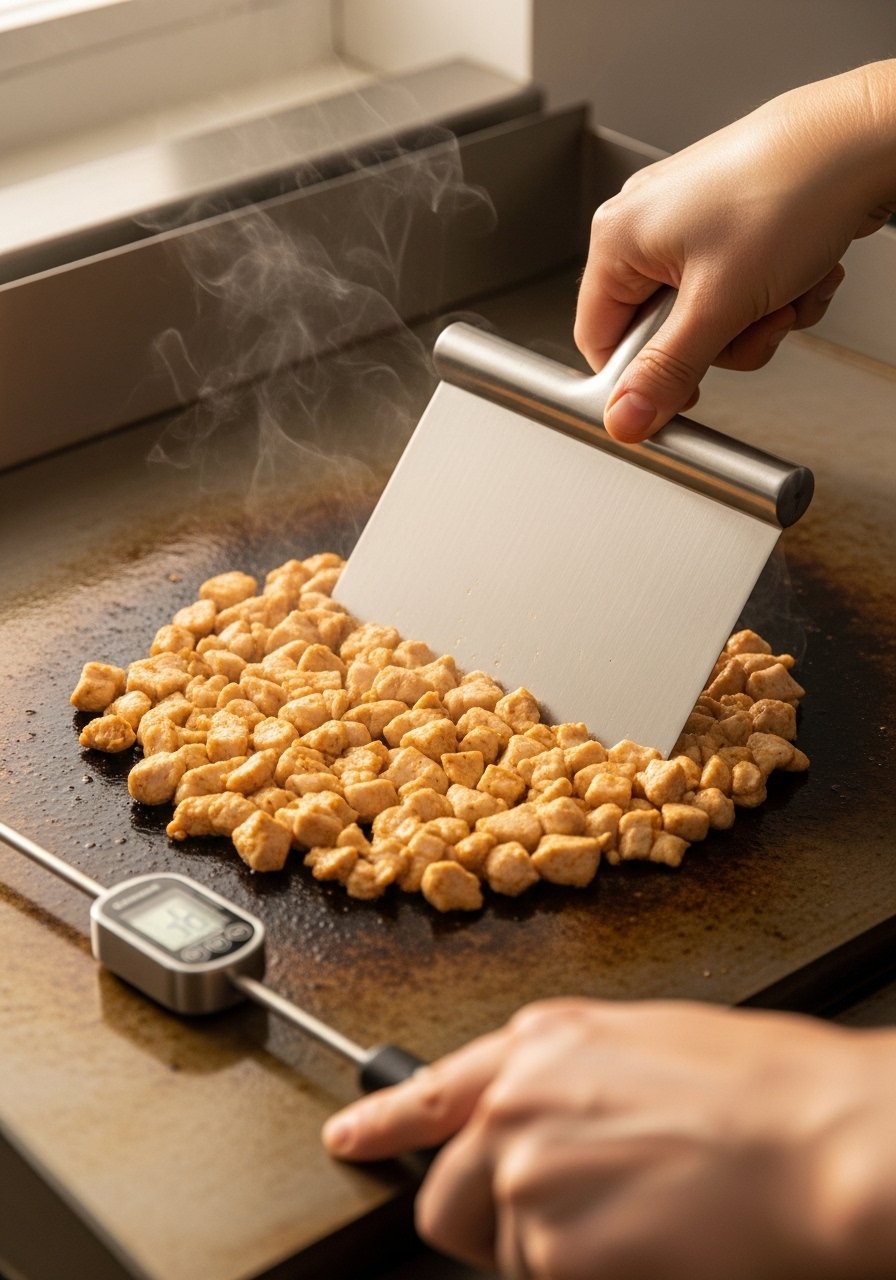
1) Preheat the Blackstone for the right “zone”
Preheat your Blackstone on medium-high for 8–10 minutes. You’re aiming for a surface temp around 375–425°F. If you have an Infrared Thermometer, it makes this effortless.
This step matters because chicken browns best when the metal is hot enough to sear, but not so hot that the outside scorches before the inside cooks.
2) Prep chicken for even cooking (size + dryness)
Cut chicken into even ¾-inch cubes. Then pat it dry with paper towels. Moisture is the #1 reason diced chicken steams and turns patchy in color.
Toss with oil, salt, pepper (and garlic powder if using). Coating the chicken—not just the griddle—helps it brown more evenly and reduces sticking.
3) Spread into a single layer and don’t crowd
Add chicken to the griddle and immediately spread it into one even layer with space between pieces. Use a sturdy Griddle Spatula so you can move pieces quickly without shredding them.
Let it sit untouched for 2–3 minutes. That contact time is what builds the golden crust and prevents you from chasing sticking pieces around too early.
4) Flip in batches, then finish to temperature
Flip and stir, focusing on turning the paler sides down onto the hot surface. Cook another 3–5 minutes, stirring every 60–90 seconds, until most pieces look opaque and lightly browned.
Check the largest cube with an Instant Read Meat Thermometer. Pull the chicken at 165°F. If pieces are browning too fast before they reach temp, lower the heat slightly and keep them moving.
The Heat Setting That Prevents Dry, Uneven Cubes
Medium-high is usually the sweet spot, but the real goal is controlled browning. If your Blackstone runs hot, you may need medium once the surface is fully preheated.
Use these quick cues:
- Too cool (steaming): chicken looks wet, releases lots of liquid, turns white with little browning
- Just right: steady sizzle, light browning in 2–3 minutes without black spots
- Too hot: fast darkening within 60–90 seconds, seasoning starts to smell scorched
If you’re unsure, checking with an Infrared Thermometer keeps you consistent from cook to cook.
How to Prevent Sticking Without Drowning It in Oil
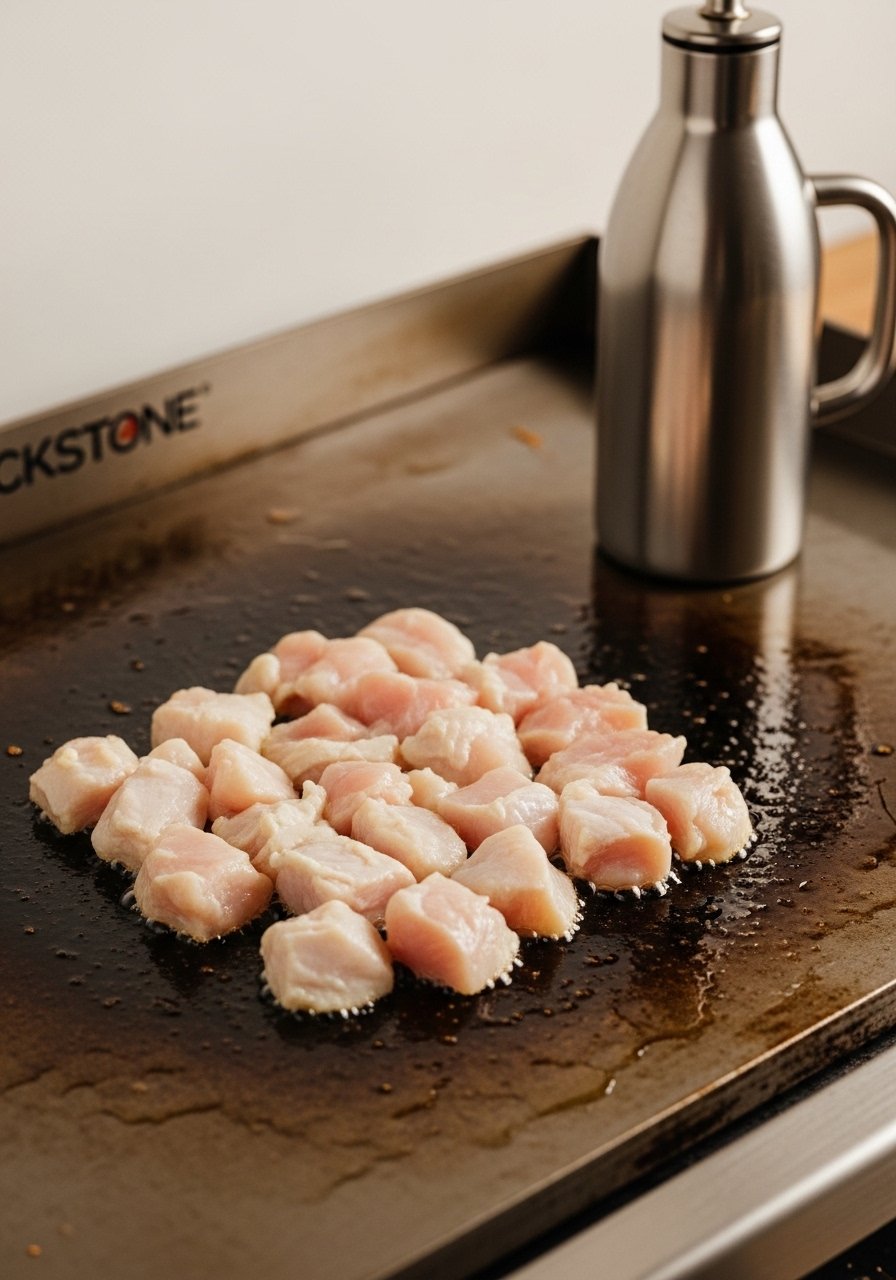
Start with a clean, hot griddle and a thin oil layer. Too much oil can actually reduce browning by “frying” unevenly and cooling the surface when chicken releases moisture.
Do this instead:
- Oil the chicken lightly, then add a small slick of oil to the griddle
- Let the chicken sear before you try to move it (2–3 minutes)
- Use a firm edge spatula so you can get under the cubes cleanly
A Griddle Oil Bottle helps you lay down a controlled, even stream without overdoing it.
The #1 Reason Diced Chicken Cooks Unevenly (And the Fix)
Uneven size is the biggest culprit. If some cubes are ½-inch and others are 1-inch, you’ll overcook the small ones while waiting for the larger ones to hit 165°F.
Fix it fast:
- Aim for ¾-inch cubes (they cook quickly but stay juicy)
- If you already cut mixed sizes, push smaller pieces to a slightly cooler area of the griddle and finish bigger pieces on the hotter zone
- Always temp the largest piece, not the average-looking one
For clean, consistent cuts, a sharp Chef’s Knife makes a noticeable difference.
Timing Cheat Sheet for Evenly Cooked Diced Chicken
Cook time depends on cube size and griddle temp, but these ranges stay reliable when you use ¾-inch pieces and 375–425°F surface heat.
- First side sear (don’t touch): 2–3 minutes
- After flipping/stirring: 3–5 minutes
- Total time: about 6–8 minutes
Visual doneness cues help, but temperature is your guarantee:
- Opaque throughout, no raw pink centers
- Juices run clear when a piece is pressed
- 165°F in the largest cube with an Instant Read Meat Thermometer
Final Thoughts
Once you control three things—cube size, griddle heat, and spacing—your diced chicken cooks evenly on the Blackstone without stress. Sear it, then stir with purpose, and let temperature be the final judge.
Do it this way a couple times and you’ll stop guessing. You’ll just get consistent browning and juicy pieces every time.