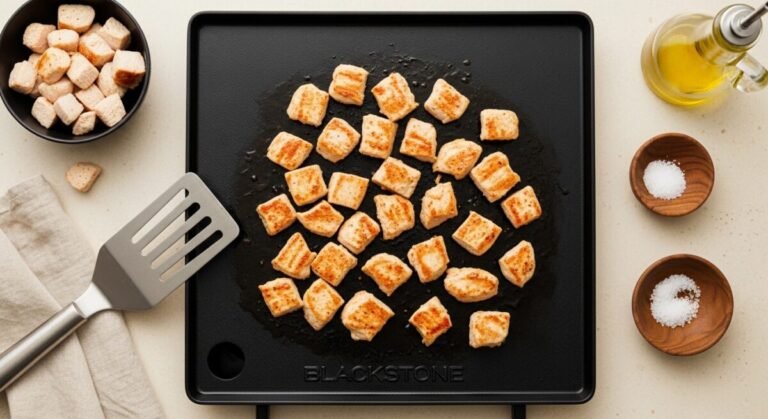
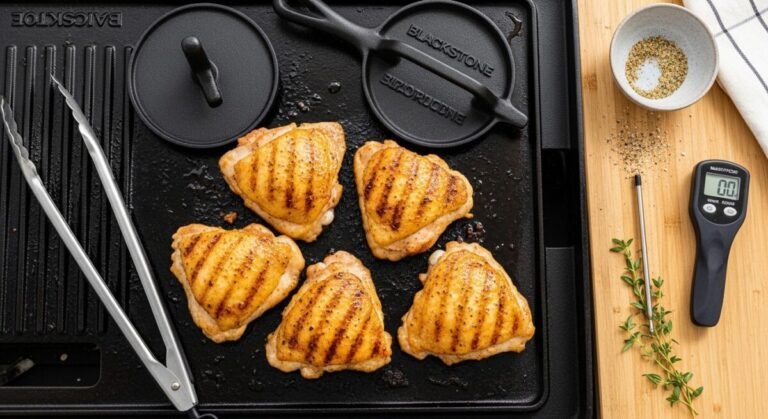
Cooking frozen chicken on a Blackstone can feel like a gamble—burnt outside, cold center, or a puddle of water that kills your sear. You’re not alone.
The good news: you can cook frozen chicken safely and fast on a griddle if you control heat, manage steam, and verify the internal temp. This guide walks you through exactly what to do so your chicken cooks through evenly and stays juicy.
How To Cook Frozen Chicken On Blackstone
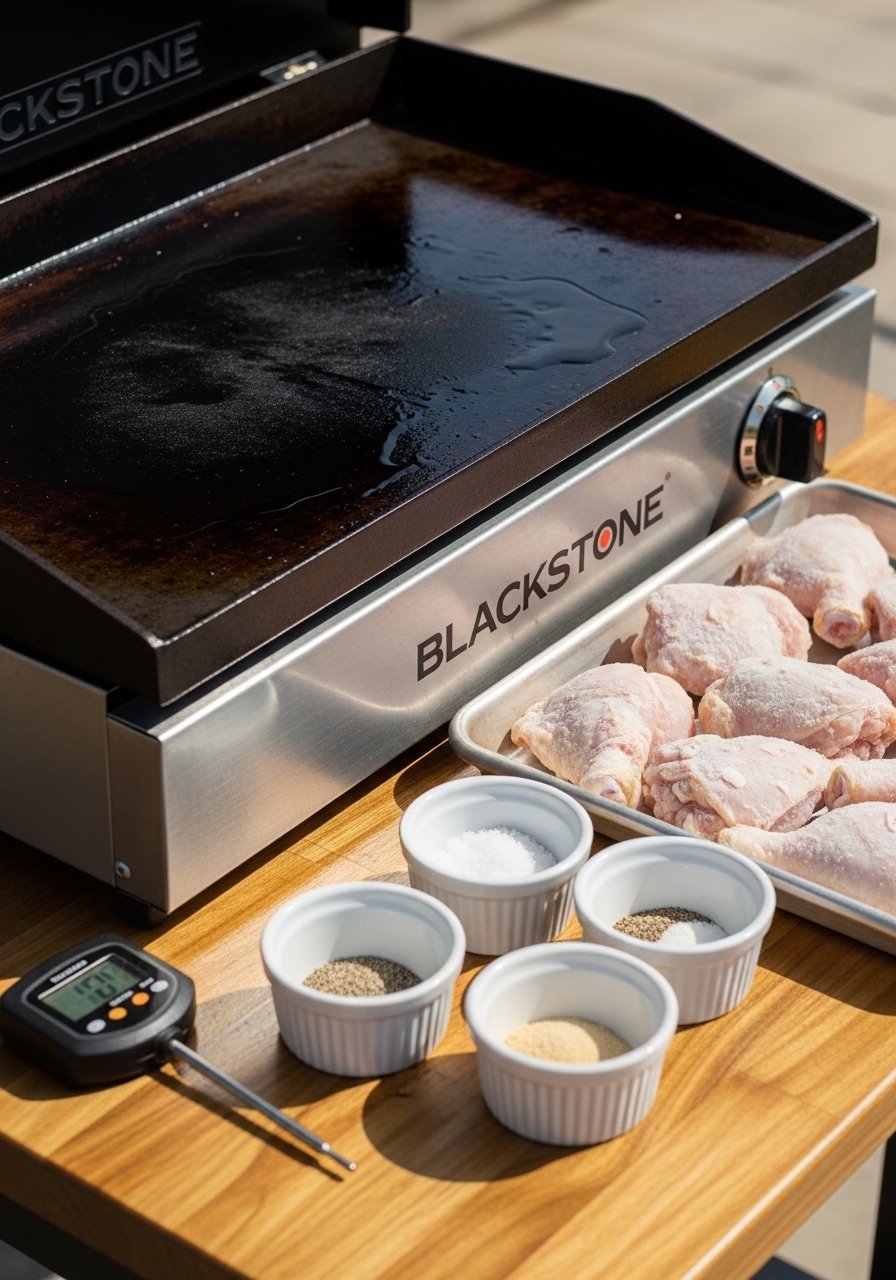
You’re going to thaw the surface just enough on the griddle, then cook with controlled heat until the chicken reaches a safe internal temperature. The goal is fully cooked chicken with a lightly browned exterior—not scorched edges and an underdone middle. This method works best when you use a thermometer and keep the griddle from running too hot.
Step-By-Step Guide
1) Preheat the Blackstone for “controlled heat,” not max heat
Set your Blackstone to medium (often around the 350°F surface range). Give it 8–10 minutes to fully preheat so the temperature is steady, not spiking.
A steady griddle prevents the outside from over-browning while the center is still frozen. If you have a surface temp tool like an Infrared Thermometer Gun, you can quickly confirm you’re in the right zone.
2) Lightly oil the surface, then place chicken down to “release the ice”
Add 1–2 teaspoons of a high-heat oil, then spread it thin. Use an Oil Squeeze Bottle so you don’t overdo it.
Place the frozen chicken on the griddle and let it sit 2–3 minutes without moving it. This first contact helps melt the outer ice and starts cooking the surface so seasoning will actually stick.
3) Cover briefly to steam-thaw, then season as soon as it’s tacky
Cover the chicken for 3–5 minutes to trap heat and gently thaw the surface. A simple Griddle Dome Cover makes this step easy and keeps splatter down.
Uncover and check the top: when it looks wet but not icy, season both sides with salt and pepper (or your go-to blend). This timing matters—seasoning won’t adhere well to a hard-frozen surface.
4) Cook with a two-zone approach for even doneness
Move one burner slightly lower (or shift chicken to a cooler side) so you have a hot zone and a gentler zone. Sear on the hotter area for 2–4 minutes per side until you see light browning.
Then slide the chicken to the gentler side and cover again. This finishes the center without scorching the outside. Flip every 3–4 minutes so both sides heat evenly.
5) Confirm doneness with internal temperature (non-negotiable)
Start checking when the chicken feels firmer and juices run clearer—usually 12–18 minutes total depending on thickness and cut. Use an Instant-Read Meat Thermometer and test the thickest part.
You’re done when it reaches 165°F. If it’s at 150–160°F, cover and cook 2–3 more minutes, then recheck. Temperature is the safety step that makes cooking from frozen reliable.
Safe Temps and Timing (So You Don’t Guess)
Frozen chicken cooks unevenly if the griddle is too hot, so your “fast” comes from consistency, not cranking burners.
- Target internal temp: 165°F (thickest part)
- Typical total time: 12–20 minutes
- Best griddle surface range: roughly 325–375°F
- Flip cadence: every 3–4 minutes after the first thaw/sear phase
Thicker pieces take longer, and some frozen cuts vary in thickness in the same bag. That’s why checking more than one piece with a thermometer is smart when you’re cooking a batch.
The Biggest Mistakes When Cooking Frozen Chicken on Blackstone
Most problems come from fighting moisture and heat at the same time.
- Starting on high heat: you’ll char the outside before the center thaws. Keep it at medium and be patient early.
- Skipping the cover/steam step: without a brief steam-thaw, you’ll spend longer cooking and still risk an underdone middle.
- Overcrowding the griddle: too much chicken drops the surface temp and creates a watery layer instead of browning. Leave space.
- Relying on color: frozen chicken can brown while the center is still below safe temp—use a thermometer.
A good, thin-edged Griddle Spatula helps you flip cleanly once the surface releases, instead of tearing pieces that are still stuck.
How to Keep Frozen Chicken From Turning Watery (While Still Cooking Fast)
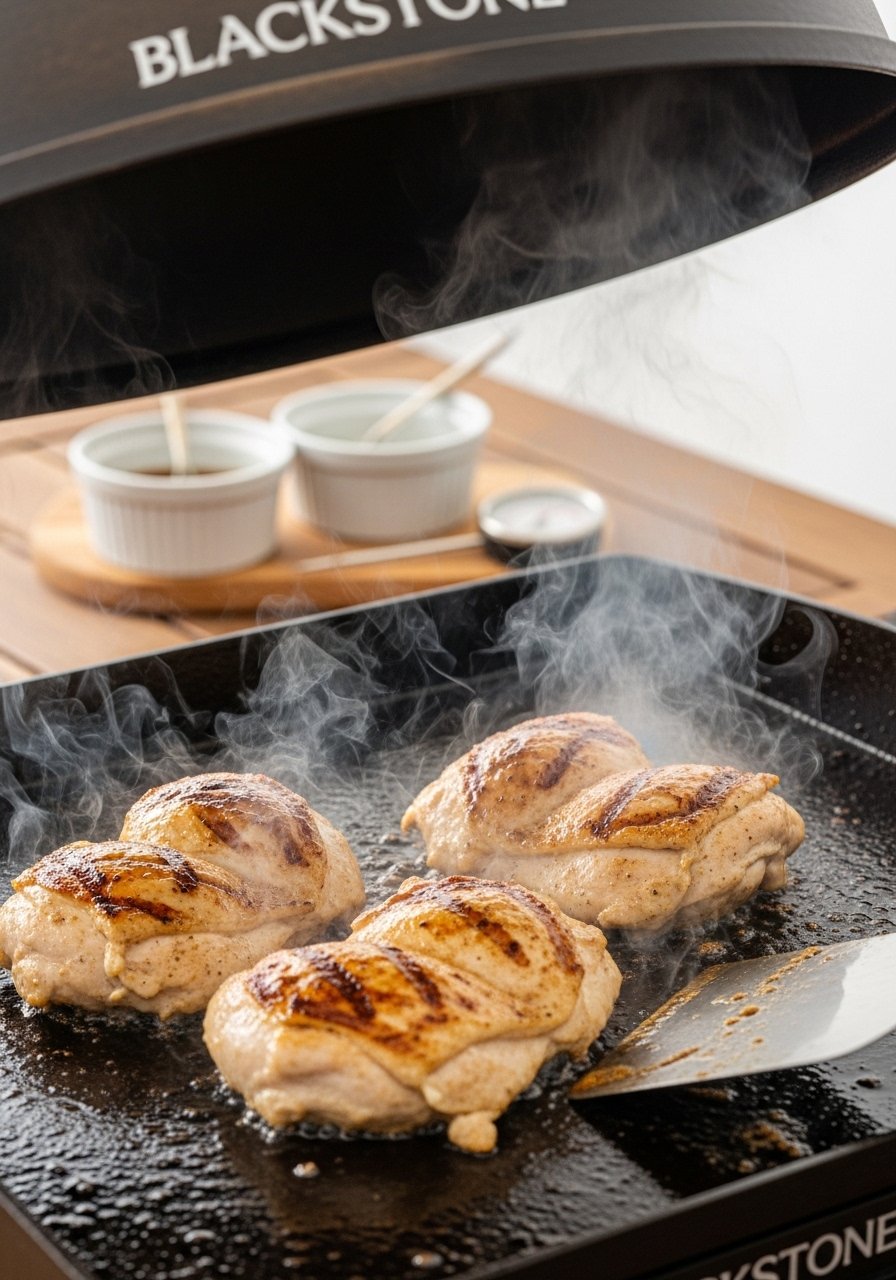
Frozen chicken releases moisture as it thaws. Your job is to manage that moisture so you can still brown the outside.
First, cover only in short bursts. Steam helps thaw, but too much steaming for too long can leave the surface pale. Steam-thaw early, then uncover to let moisture evaporate and browning begin.
Second, don’t add sauce until after 165°F. Sauces slow evaporation and can trap the cold center. If you want a glaze, cook the chicken through first, then brush and give it 30–60 seconds per side to set.
Final Thoughts
Cooking frozen chicken on a Blackstone is completely doable when you use medium heat, a quick steam-thaw, and steady flipping. The thermometer is what makes it safe and stress-free.
Once you hit 165°F, you’re done—no guessing, no undercooked centers, and no scorched outsides.