You want quick meals without last-minute prep. Freezing chicken patties is one of the best ways to meal-prep protein that reheats well and stays tasty. This guide shows exactly how to freeze patties so they separate, stay fresh, and reheat evenly.
You’ll avoid freezer burn, clumped patties, and wasted time. Follow these step-by-step actions, use the right tools, and your future dinners will be effortless.
How To Freeze Chicken Patties

Freezing chicken patties means preparing them to hold shape, preventing sticking, and storing them long-term at safe temperatures. You’ll learn flash-freezing, packing, labeling, and storage cues that preserve texture and flavor.
Step-By-Step Guide
1. Cool or partially cook first
If patties are freshly formed, chill them 20–30 minutes in the fridge so they hold shape. If you prefer cooked patties, let them cool to room temperature for 15–20 minutes, then refrigerate until just cool. Cooling prevents steam buildup and sogginess when frozen.
Tools that help: a rimmed baking sheet (rimmed baking sheet) and a cooling rack if you’re cooking first.
2. Flash-freeze individually
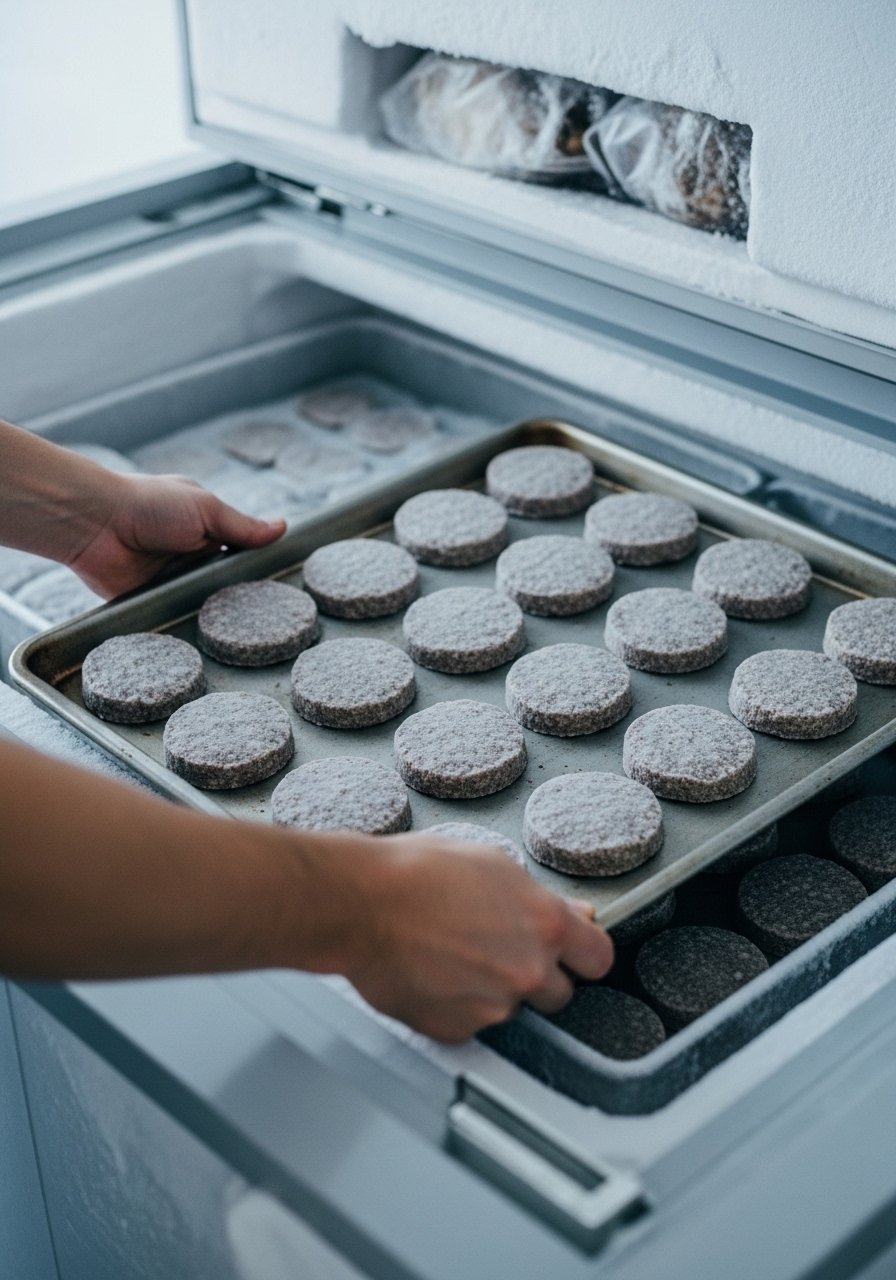
Arrange patties on a parchment-lined baking sheet so edges don’t touch. Place the sheet uncovered in a single layer in the coldest part of your freezer. Freeze 1–2 hours until patties are firm and not tacky. This “flash-freeze” step stops them from freezing into one block.
Use parchment paper (parchment paper rolls) or a silicone baking mat to prevent sticking and to make cleanup easy.
3. Pack smart to prevent freezer burn
Once patties are solid, stack with a piece of parchment between each or keep single layers. Transfer to a freezer-grade bag and squeeze as much air out as possible before sealing. For best long-term texture, vacuum-seal individual portions (vacuum sealer machine) to remove air and protect flavor.
Choose heavy-duty freezer bags (freezer bags) or vacuum pouches. Remove excess air by hand or with the sealer to reduce freezer burn.
4. Label, date, and organize
Write the contents and freeze date on each bag with a permanent marker. Group similar patties together (raw vs. cooked) and store flat for 24 hours so packs set, then stand them upright like a library for easy access.
A reliable marker helps: permanent markers. Also keep a freezer thermometer (freezer thermometer) to ensure the temperature stays at 0°F (−18°C) or below.
5. Thawing and reheating basics
Thaw overnight in the refrigerator for even reheating. If cooking from frozen, add a few extra minutes—about 4–6 minutes per side on a skillet or 8–10 minutes in a 375°F oven—until internal temp reaches 165°F (74°C). Visual cues: no pink center and juices run clear.
Reheating from frozen works well for cooked patties; raw patties can be cooked from frozen but need careful temperature checks.
Best Containers & Tools
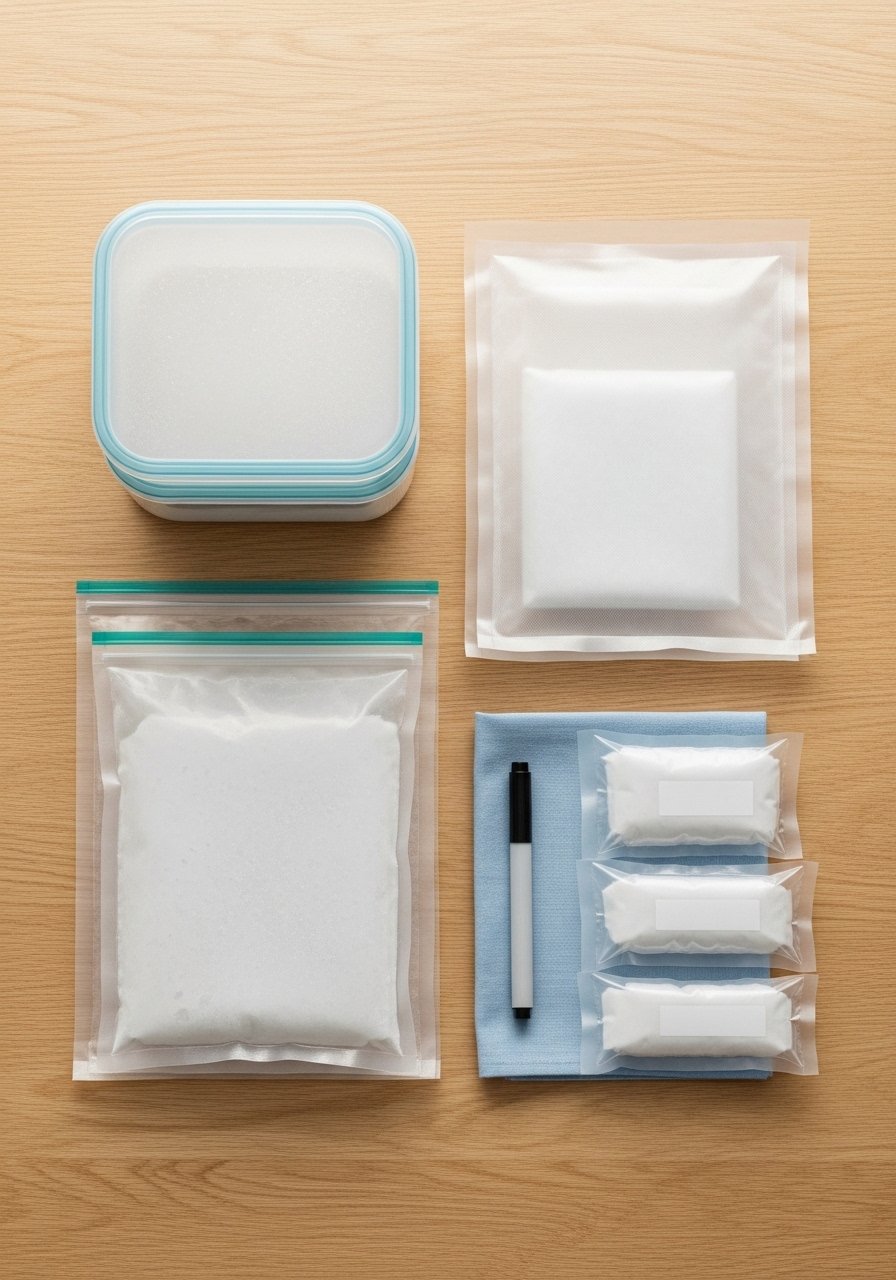
Choose flat, stackable bags or vacuum pouches to save space and keep patties protected. Rigid plastic containers are okay for short-term storage but can trap air. Vacuum sealing is best for long storage; freezer bags are good for 3–4 weeks of optimum quality.
Use a baking sheet and parchment for flash-freezing. A freezer thermometer ensures your appliance keeps a stable 0°F (−18°C).
How Long Do Frozen Chicken Patties Last

For best quality, cooked patties last 2–3 months; raw patties are best within 3–4 months. They remain safe longer if kept constantly frozen, but flavor and texture decline over time. Rotate older packs forward and use by the date on the label.
Thawing Safety & Quick Reheat Options
If you need patties fast, thaw in a sealed bag in cold water for 30–60 minutes; change the water every 20 minutes. Cook immediately after cold-water thawing. For quick reheats from frozen, use a skillet with a lid or a 375°F oven until the center reaches 165°F.
Final Thoughts
Freezing chicken patties correctly saves time and keeps meals reliable. Follow flash-freezing, airtight packing, and clear labeling to maintain quality.
With a few simple tools and consistent steps, your freezer becomes a weeknight lifesaver. Enjoy easier dinners and less waste.