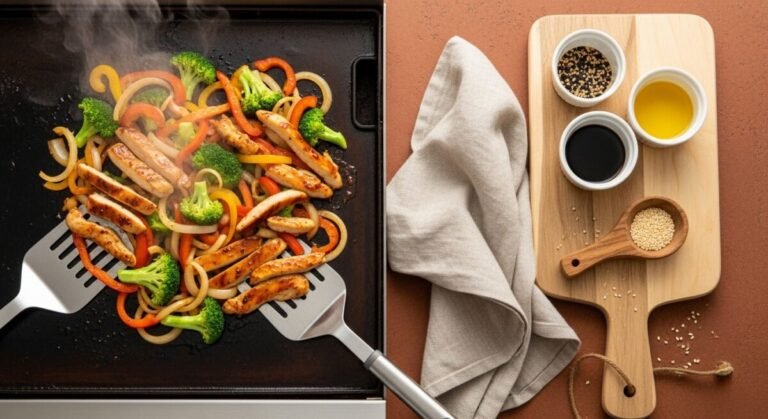
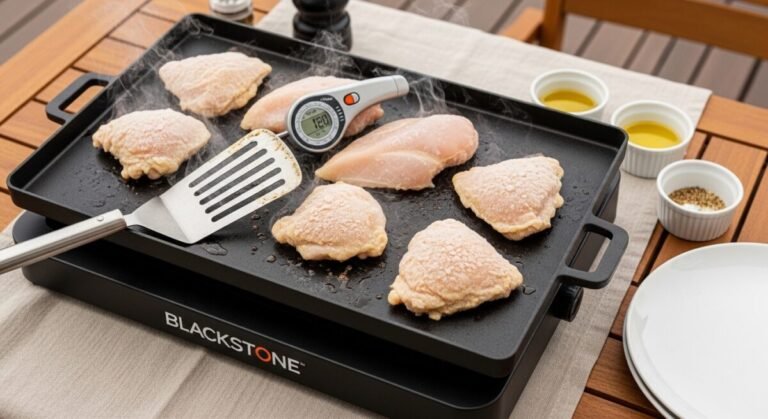
You can have the best Blackstone griddle setup in the world and still end up with chicken that tastes “fine” instead of incredible. The difference is almost always the marinade—how balanced it is, how long it sits, and how you prep the chicken before it hits the hot surface.
This guide shows you exactly how to marinate chicken for Blackstone cooking so you get bold flavor, better browning, and juicy results—without burning the sugars or over-salting.
How To Marinate Chicken For Blackstone Cooking
Marinating for a Blackstone is a little different than marinating for the oven or grill. Because the griddle is direct, fast heat, you want flavor that clings well, won’t scorch easily, and helps the chicken brown while staying juicy.
Step-By-Step Guide
1) Choose the right cut (and match it to your marinade strength)
Thighs and tenderloins are the most forgiving for griddle cooking. They stay juicy even if you go a minute too long, and they take on marinade well.
Breasts can absolutely work, but they need a slightly gentler marinade (less acid) and more attention to thickness. If you’re using breasts, plan to pound them to an even thickness so the marinade and cooking stay consistent.
2) Trim, portion, and dry the chicken first
Trim excess fat and any loose bits that can burn on the griddle. If pieces are uneven, portion them so everything marinates and later cooks at the same pace.
Then pat the chicken dry with paper towels. This sounds small, but it matters: less surface water means your marinade clings better and you don’t dilute the flavor. It also helps you avoid a watery bag of marinade that never really penetrates.
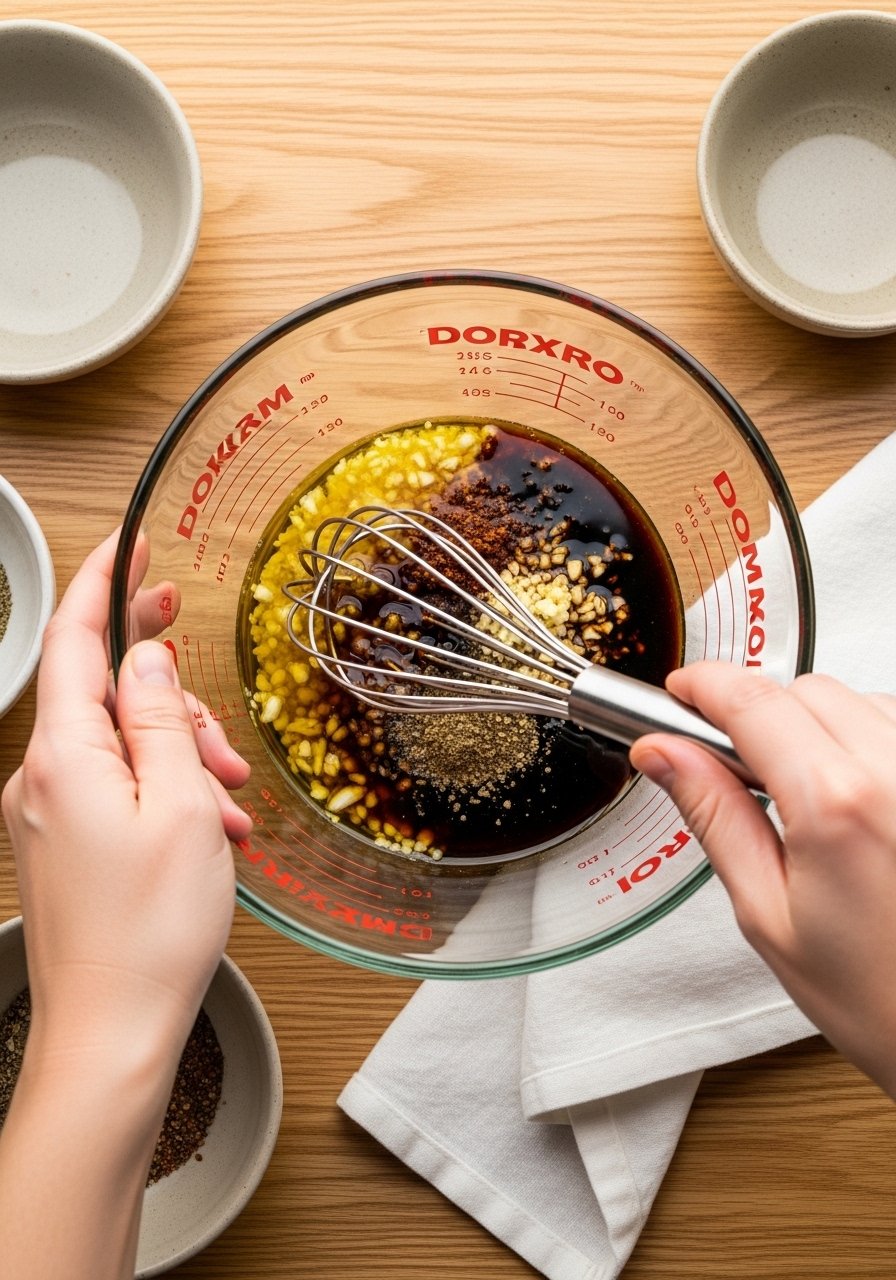
3) Build a “Blackstone-friendly” marinade (fat + salt + flavor + a little acid)
Aim for a marinade that’s bold but not sugary. A simple, reliable ratio is:
- Fat for moisture and browning (like oil or mayo)
- Salt for seasoning and light brining (like kosher salt or soy sauce)
- Flavor from spices, garlic, herbs
- Acid kept moderate (lemon/vinegar) so it doesn’t toughen the outside
Whisk it in a bowl so it’s fully blended before the chicken goes in. A small Glass Mixing Bowls Set makes this cleaner and easier, especially when you’re measuring and whisking.
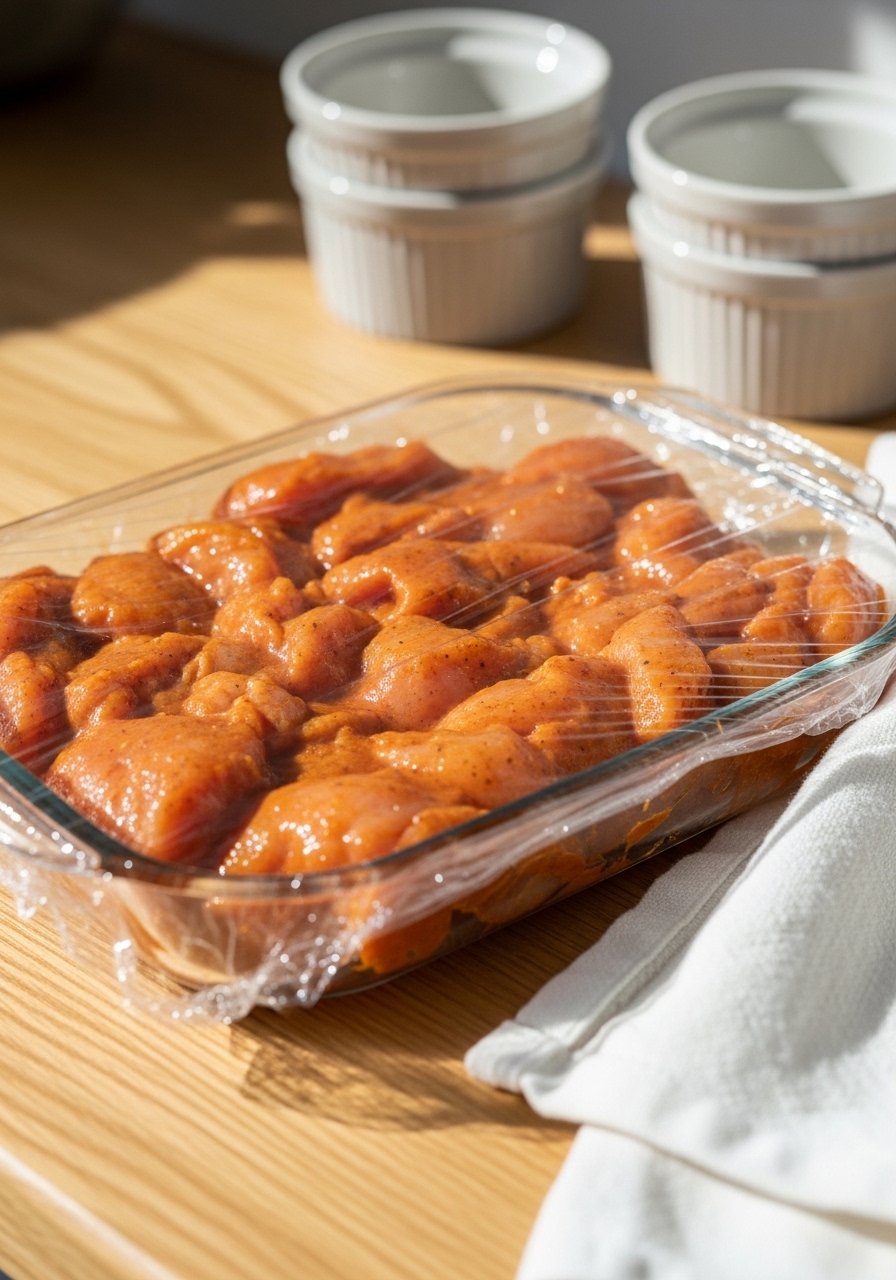
4) Marinate in a thin, even layer (bag or shallow dish)
Use a zip-top bag or a shallow nonreactive dish so the marinade contacts as much surface as possible. In a deep bowl, chicken stacks and the top pieces don’t get the same coverage.
If you use a bag, press out excess air and massage the marinade around the chicken. This improves contact and helps flavor distribute evenly. A Reusable Silicone Food Storage Bags Set is handy here because it stands up, seals well, and is easier to clean than thin disposable bags.
5) Use the right marinating times (and don’t overdo it)
Time is where most Blackstone chicken goes wrong—either under-marinated (bland) or over-marinated (mushy edges that brown poorly).
Use these simple windows:
- Tenderloins: 30 minutes to 4 hours
- Thighs: 1 to 12 hours
- Breasts: 30 minutes to 6 hours (keep acid low)
Always marinate in the fridge. If you’re short on time, even 30–45 minutes makes a noticeable difference when the marinade has enough salt and aromatics.
6) Pull from the fridge briefly, then wipe off excess before cooking
About 15–20 minutes before you plan to cook, take the chicken out of the fridge so it’s not ice-cold on the surface. This helps it cook more evenly later.
Right before it hits the griddle, gently scrape or blot off thick pools of marinade (especially minced garlic, honey, or heavy spice paste). You want a coated surface, not dripping wet chicken—excess marinade steams and can scorch on a hot Blackstone.
A Simple Marinade Formula That Works Well On A Blackstone
Use this as a mix-and-match framework so your chicken browns well and tastes seasoned all the way through.
- Fat (2–3 Tbsp per 1 lb chicken): olive oil, avocado oil, or a spoon of mayo for extra cling
- Salt (1–1½ tsp kosher salt per 1 lb OR 2–3 Tbsp soy sauce): pick one main salt source
- Aromatics: 2–4 minced garlic cloves, grated onion, scallions, or dried onion powder
- Spices: paprika, black pepper, cumin, chili powder—choose 2–3
- Acid (1–2 Tbsp per 1 lb): lemon juice or vinegar (keep it moderate)
Measure quickly and consistently with a Measuring Spoons and Cups Set so you don’t accidentally double the salt or acid.
Common Blackstone Marinade Mistakes (And How To Avoid Them)
Overly sugary marinades are the fastest way to burn flavor on a griddle. A Blackstone’s direct heat can caramelize quickly—then tip into bitter if there’s too much honey, brown sugar, or sweet bottled sauce.
Also watch heavy chunks (like lots of minced garlic). Those bits can blacken before the chicken browns. Keep garlic moderate, or use some garlic powder for flavor without as much risk of scorching.
Finally, don’t keep re-dipping the chicken into used marinade. If you want extra “wet” flavor later, set aside a small portion of marinade before it touches raw chicken.
Food Safety And Texture Tips While Marinating
Marinate chicken in the fridge, not on the counter. Cold temps keep the chicken safe and also help the texture stay firm while the salt does its job.
If your marinade has a lot of acid (citrus or vinegar), keep the time shorter—especially for breasts. Too much acid too long can make the outside of the chicken turn soft and slightly “cooked,” which hurts browning later.
A Instant Read Meat Thermometer won’t marinate your chicken, but it does prevent the most common follow-up problem: pulling chicken too late and drying out the work you just did in the marinade.
Final Thoughts
Marinating chicken for Blackstone cooking is about balance: enough salt and fat for flavor and browning, controlled acid for tenderness, and smart timing so the texture stays right.
Keep the coating thin, avoid heavy sugar, and give it the right window in the fridge. You’ll taste the difference immediately.