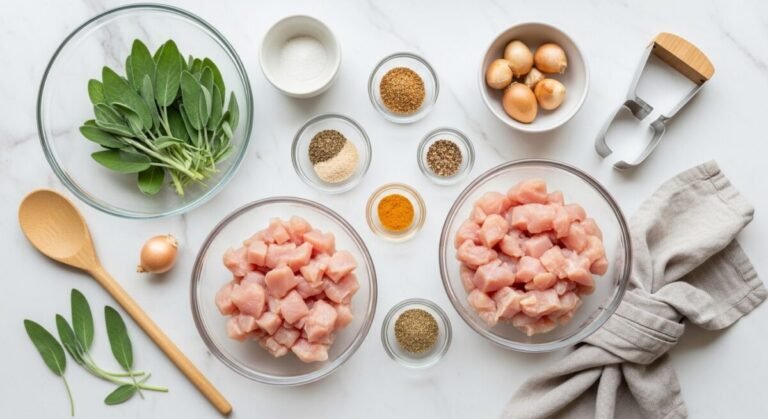
You want a roasted chicken that tastes like something from a restaurant — well seasoned, deeply flavored, and balanced from skin to cavity. Seasoning is the single most important step that decides the final flavor. Do it right and the roast sings; do it poorly and it’s flat.
This guide walks you through each seasoning choice and action. You’ll learn exactly when to salt, where to tuck butter and herbs, what spice ratios work, and the simple tools that make every step easier.
How To Season Roasted Chicken
Seasoning roasted chicken means distributing salt and flavor so the meat is seasoned inside and out. You’ll create a base with salt, add aromatics under the skin and in the cavity, finish the skin for browning, and allow time for the flavors to settle.
This is a stepwise guide for whole birds and larger pieces. Follow the order; each action builds on the last.
Step-By-Step Guide
Prep and Dry the Skin
Start with a fully thawed chicken. Pat the skin completely dry with paper towels. Dry skin lets salt stick and promotes browning during roasting.
If you skip this, the skin won’t crisp. Use a plate or rimmed tray to catch drips and keep your workspace tidy.
Dry-Brine with Kosher Salt
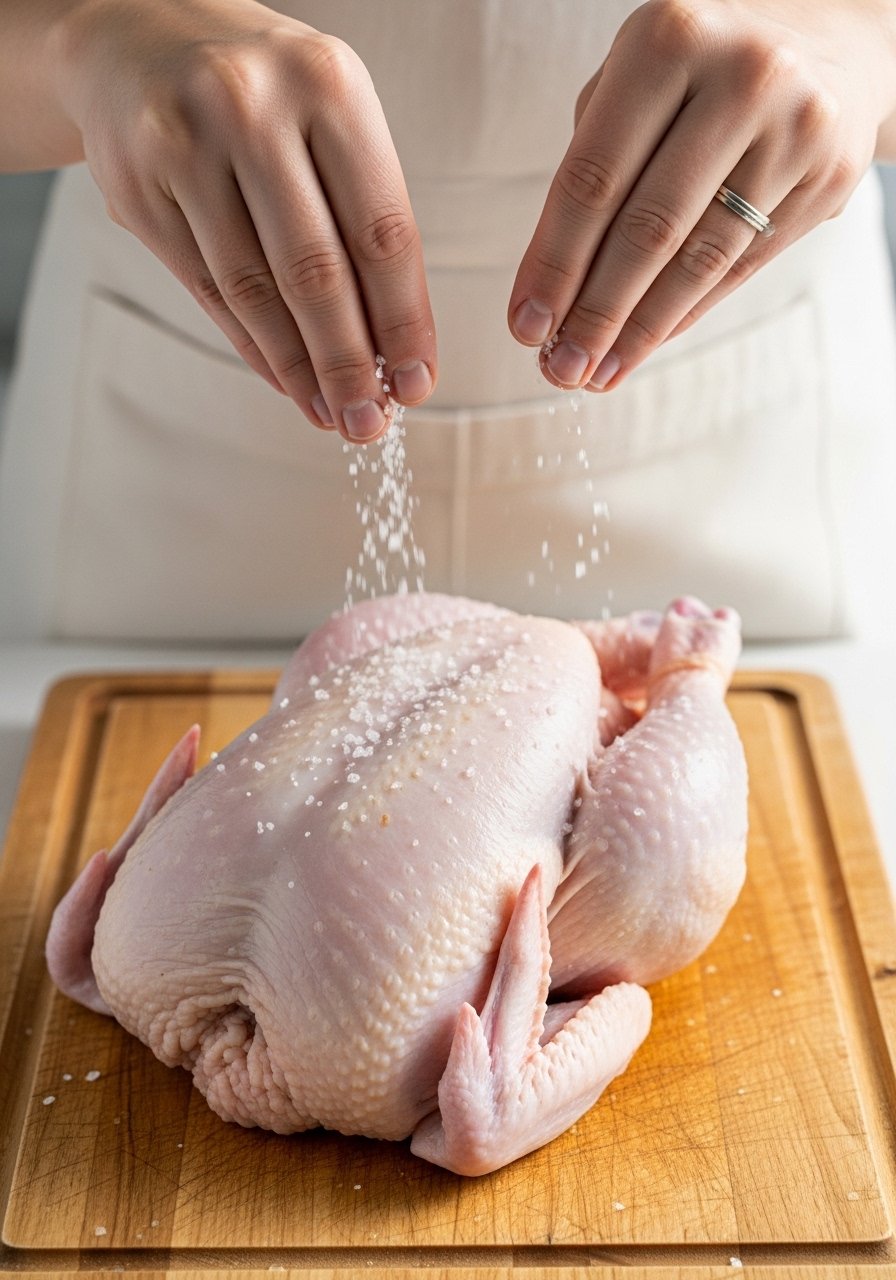
Sprinkle 1 teaspoon kosher salt per pound of chicken evenly over the exterior and inside the cavity. For table salt use about half that amount. Refrigerate uncovered for at least 6–12 hours; 12–24 hours is ideal.
Dry-brining draws moisture out then back in, seasoning the meat deeply and improving skin texture. Use coarse kosher salt for easy control. Kosher Salt
Work Flavor Under the Skin
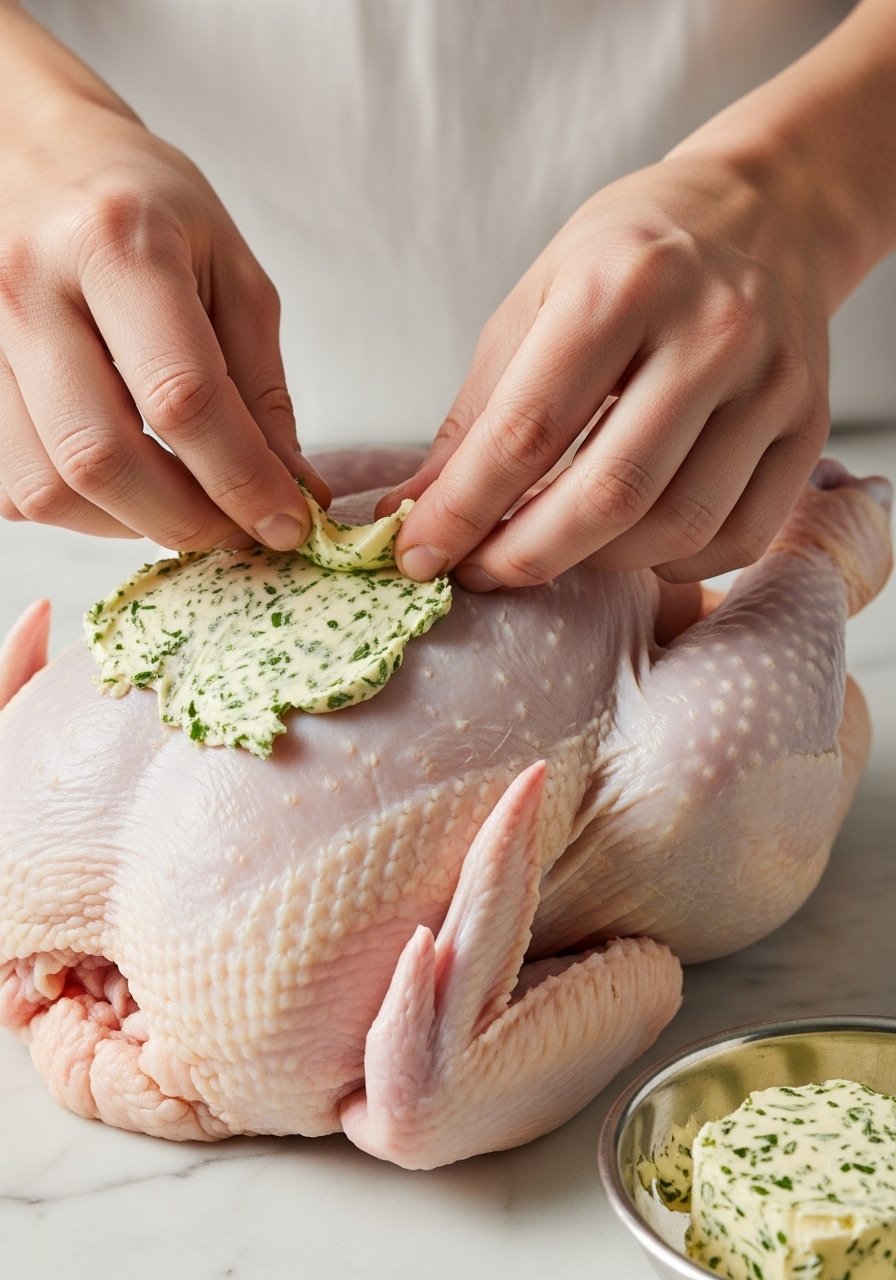
Loosen the skin gently at the breasts and thighs without tearing. Spread softened butter or softened olive oil mixed with chopped herbs (rosemary, thyme, parsley) and minced garlic under the skin.
Fat carries flavor and keeps the meat moist. Get the butter well under the skin so it bakes into the meat rather than only flavoring the surface.
Season the Cavity and Surface
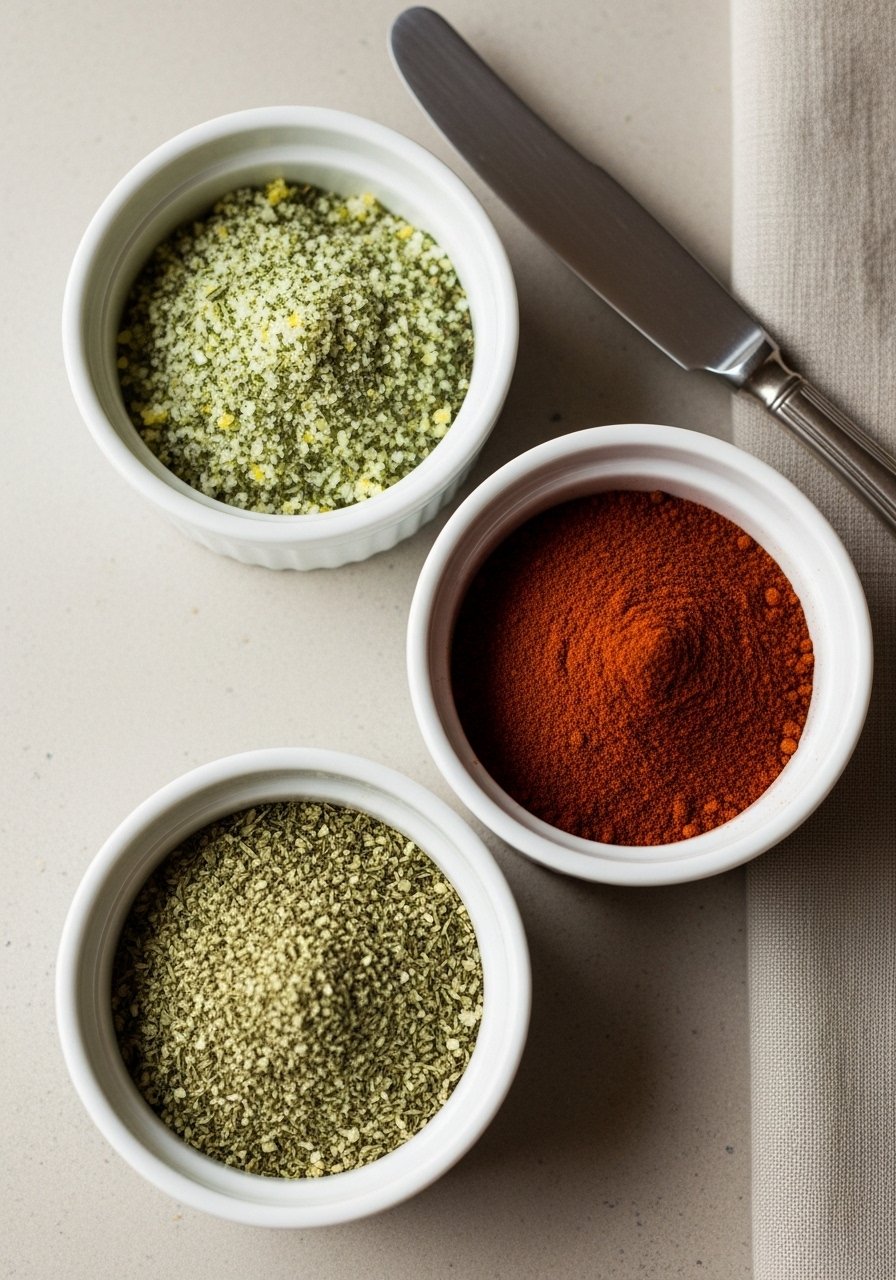
Add aromatics to the cavity: halved lemon, smashed garlic, and a few herb sprigs. On the exterior, combine 1 teaspoon pepper, 1 teaspoon garlic powder, 1 teaspoon onion powder, and 1 teaspoon smoked paprika per whole bird; rub evenly.
A balanced surface rub gives color and layered flavor. Adjust heat and smoke by swapping or reducing smoked paprika if you prefer milder notes.
Oil or Butter Coat for Browning
Brush the skin lightly with neutral oil or melted butter right before roasting. This promotes even browning and helps the rub adhere.
A light, even coat is better than slathering. Use a silicone brush for control. Silicone Basting Brush
Rest Briefly Before Roasting
Let the seasoned bird sit at room temperature 30–60 minutes before it goes into the oven if you’ve only dry-brined briefly. If you refrigerated for a long dry-brine, take it out 30 minutes before cooking.
This evens internal temperature and helps the skin crisp more quickly. Don’t leave the chicken out for more than two hours.
Best Salt-To-Chicken Ratios
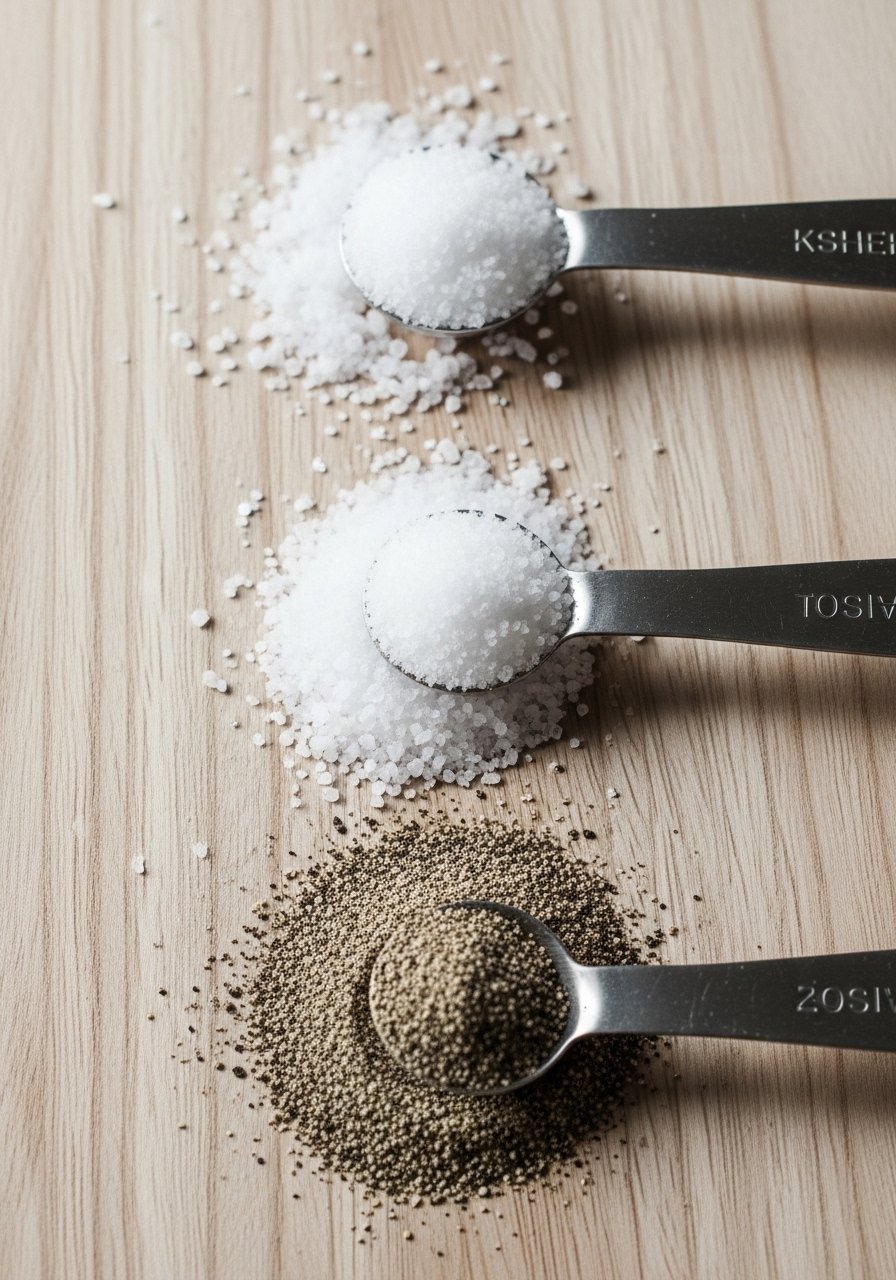
- Whole chicken: 1 teaspoon kosher salt per pound (Diamond Crystal measurement).
- Bone-in pieces: ½ to ¾ teaspoon per pound.
- Table salt: use about half the kosher quantity.
Salt type matters because crystal size affects volume. Weighing salt is precise, but teaspoons work well for home cooks. Proper salting is the backbone of even seasoning.
Flavor Variations That Actually Work
- Lemon-Herb: Under-skin butter with lemon zest, thyme, and parsley. Finish with lemon slices in cavity. Bright and classic.
- Smoky Paprika & Garlic: Exterior rub with smoked paprika, garlic powder, oregano, and black pepper for savory depth.
- Herb-Butter & Shallot: Minced shallot in herb butter under the skin for a sweeter, richer profile.
Apply variations in the same steps above—under-skin fat, cavity aromatics, and surface rub—so the flavor is layered, not one-note.
Tools That Make Seasoning Easier
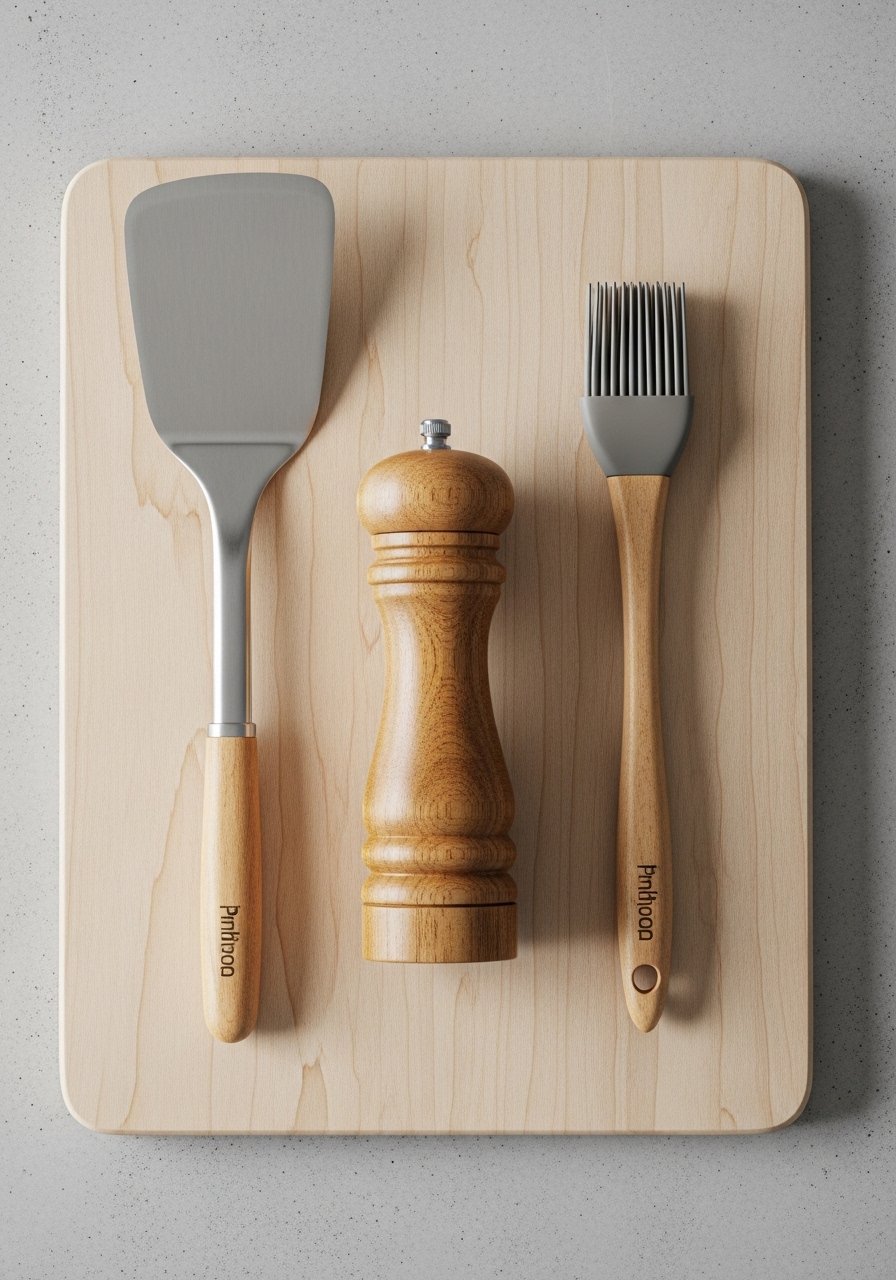
- Offset spatula or small spoon to slide under the skin and spread butter. Offset Spatula
- Coarse pepper mill for fresh-cracked pepper on the skin. Pepper Mill
- Silicone basting brush to oil skin evenly. Silicone Basting Brush
Each tool solves a clear task: lift skin safely, apply even seasoning, and finish the skin for perfect color.
Final Thoughts
Seasoning roasted chicken is a series of deliberate, small moves: salt in the right amount, flavor beneath the skin, aromatics in the cavity, and a light fat coat to finish. Follow the order and timing for consistently deep flavor.
You don’t need fancy ingredients—just the right technique and a couple of helpful tools. You’ll notice the difference in every bite.