Irish soda bread is one of the simplest and most comforting breads you can bake at home. With no yeast and no long rising time, it’s a quick, rustic loaf that comes together in minutes.
Known for its dense yet tender crumb and slightly tangy flavor, this bread has been a staple in Irish homes for generations.
Whether served warm with butter, alongside soup, or at breakfast with jam, this Irish soda bread recipe is a timeless classic.
Irish Soda Bread Recipe
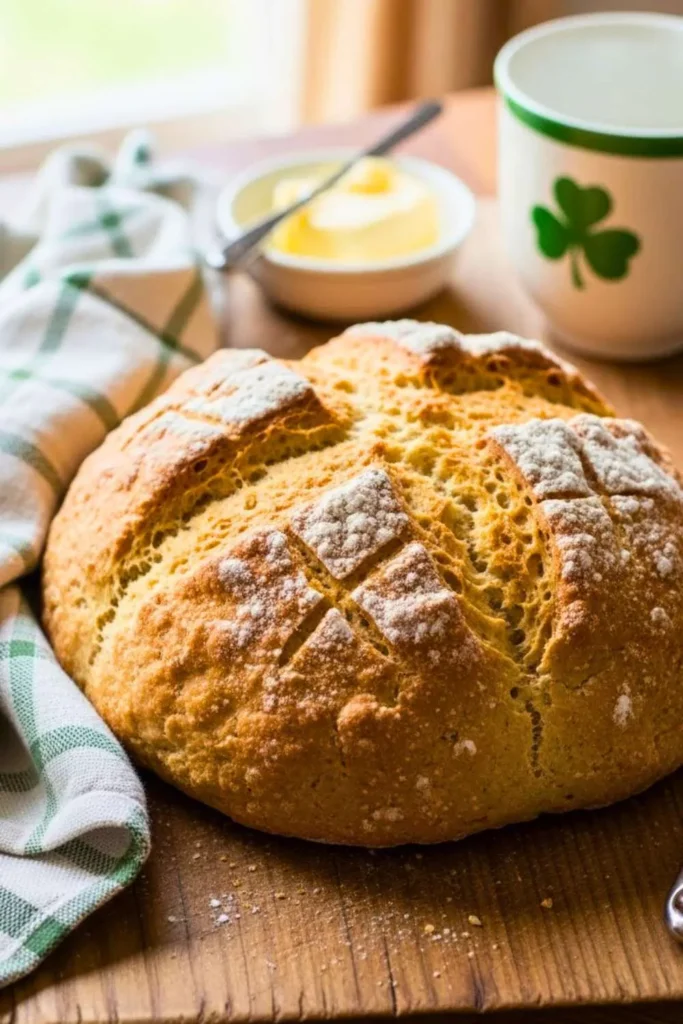
This traditional Irish soda bread has a golden crust, soft interior, and a mild, slightly tangy taste from the buttermilk.
It’s hearty without being heavy and has a beautiful rustic look with its signature cross on top.
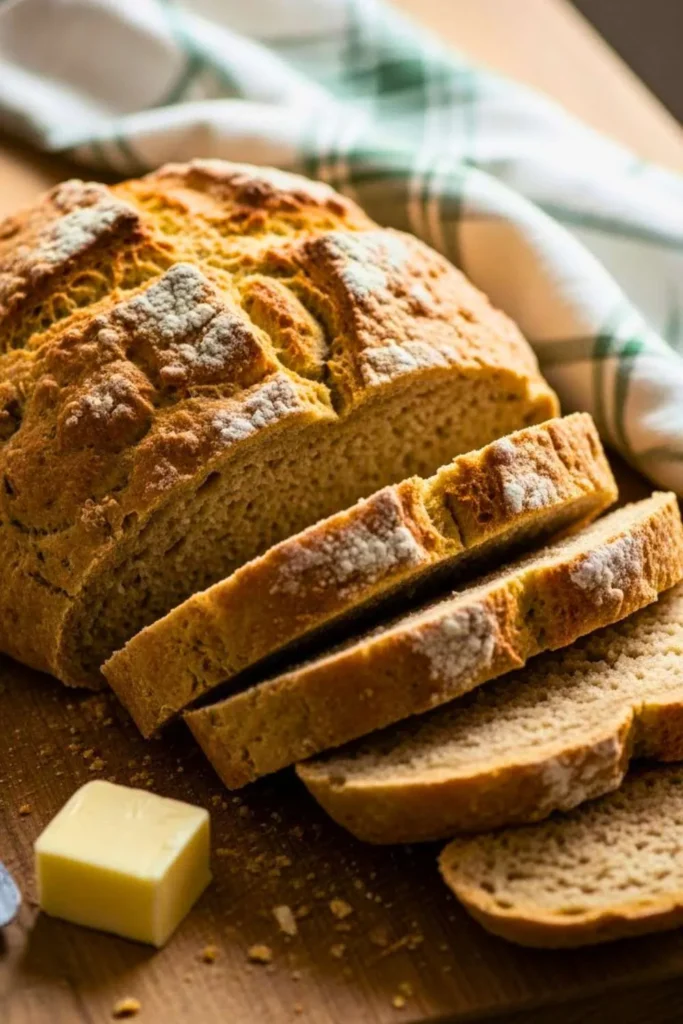
The texture is crumbly yet moist, making it perfect for slicing and spreading with butter. Best of all, it requires only a handful of basic ingredients and no special equipment.
Ingredients
- 4 cups all-purpose flour
- 1 tsp baking soda
- 1 tsp salt
- 1 ¾ cups buttermilk
- 1–2 tbsp sugar (optional, for slight sweetness)
- 2 tbsp cold butter (optional, for richer texture)
Step-by-Step Instructions
Step 1: Preheat the Oven and Prepare the Pan
Preheat your oven to 200°C (400°F). Line a baking tray with parchment paper or lightly dust it with flour. Traditional soda bread is baked free-form, so no loaf pan is needed.
Step 2: Mix the Dry Ingredients
In a large bowl, add the flour, baking soda, salt, and sugar (if using). Whisk everything together to make sure the baking soda is evenly distributed. This is important because soda bread relies entirely on baking soda for rising.
Step 3: Add the Butter (Optional)
If using butter, rub it into the flour mixture using your fingertips until it resembles coarse crumbs. This step adds richness and a softer crumb to the bread.
Step 4: Pour in the Buttermilk
Make a well in the center of the dry ingredients and pour in the buttermilk. Using a wooden spoon or your hands, gently mix until a soft, sticky dough forms. Do not overmix—the dough should be just combined.
Step 5: Shape the Dough
Turn the dough onto a lightly floured surface. Gently bring it together into a round loaf. Do not knead like regular bread—just shape it lightly to keep the texture tender.
Step 6: Cut the Cross on Top
Place the dough on the prepared baking tray. Using a sharp knife, cut a deep cross on the top of the loaf. This is traditional and also helps the bread cook evenly.
Step 7: Bake Until Golden
Bake in the preheated oven for 30–40 minutes, or until the bread is golden brown and sounds hollow when tapped on the bottom.
Step 8: Cool and Serve
Remove from the oven and let it cool slightly on a wire rack. Serve warm with butter, jam, or alongside soups and stews.
Different Variations
- Raisin Soda Bread – Add ¾ cup raisins or currants
- Cheese Soda Bread – Mix in 1 cup grated cheddar
- Herb Soda Bread – Add rosemary, thyme, or parsley
- Whole Wheat Soda Bread – Replace half the flour with whole wheat flour
- Seeded Soda Bread – Add sunflower, pumpkin, or flax seeds
What Makes Irish Soda Bread Unique
Unlike yeast breads, Irish soda bread uses baking soda and buttermilk for leavening.
This gives it its signature dense texture and slightly tangy flavor. It was traditionally made by Irish families using simple ingredients they always had on hand.
The result is a humble, rustic bread that feels homemade and comforting with every bite.
Tips for Soft and Perfect Soda Bread
Always use fresh baking soda for proper rise. Cold buttermilk works best, as it reacts strongly with the soda.
Avoid overworking the dough—rough handling will make the bread tough.
If the top browns too quickly, loosely cover it with foil while baking. For extra softness, brush the top with melted butter right after baking.
Irish Soda Bread Baking Guide
| Oven Temperature | Bread Size | Baking Time |
|---|---|---|
| 200°C / 400°F | Standard round | 30–40 min |
| 190°C / 375°F | Large loaf | 40–45 min |
| 180°C / 356°F | Mini loaves | 20–25 min |
| 200°C / 400°F | Skillet bake | 30–35 min |
Conclusion
This Irish soda bread recipe is simple, traditional, and incredibly satisfying. With its crisp crust, soft center, and rich history, it’s a bread that brings warmth and comfort to any table.
Whether you keep it classic or add your own twist, this is a recipe you’ll want to make again and again.