Mayonnaise is one of the most versatile condiments in the culinary world—creamy, tangy, and incredibly satisfying.
While store-bought mayo is convenient, nothing compares to the rich flavor and silky texture of fresh, homemade mayonnaise.
Making mayo at home also gives you control over the ingredients, allowing you to adjust acidity, sweetness, or richness depending on the dish you’re preparing.
Mayonnaise Recipe
This homemade mayonnaise recipe is classic, quick, and foolproof if you follow the steps carefully.
It uses basic pantry staples—egg yolk, oil, mustard, vinegar, and lemon juice—to create a thick, creamy emulsion that tastes fresher and more flavorful than anything store-bought.
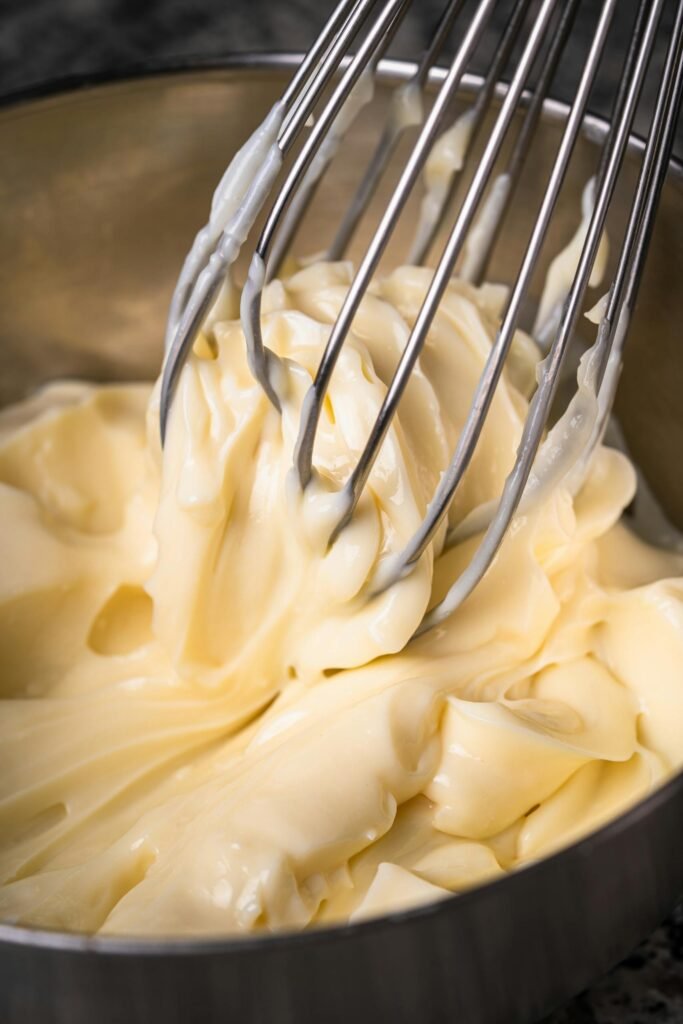
The key to success lies in slowly incorporating the oil and whisking continuously to achieve the perfect consistency.
Ingredients
- 1 large egg yolk, at room temperature
- 1 cup neutral oil (sunflower oil, canola oil, or vegetable oil)
- 1 tablespoon lemon juice (freshly squeezed)
- 1 teaspoon white vinegar
- 1 teaspoon Dijon mustard
- 1/4 teaspoon salt (adjust to taste)
- A pinch of white or black pepper (optional)
Instructions
1. Prepare the Base Mixture
Start by placing the egg yolk, Dijon mustard, vinegar, and salt into a medium-sized mixing bowl. Whisk them together until they form a smooth, blended base.
This step is important because the mustard and vinegar help stabilize the emulsion, making the mayonnaise less likely to break as you add the oil.
2. Begin Emulsifying with a Slow Drizzle of Oil
Pour just a few drops of oil into the mixture and whisk vigorously. The key is patience—adding the oil too quickly will prevent it from emulsifying.
Once the mixture starts to thicken and lighten in color, you can begin adding the oil in a very thin, steady stream while continuing to whisk without stopping.
This slow incorporation helps the egg yolk and mustard absorb the oil, creating a thick, creamy texture.
3. Add the Remaining Oil Gradually
When about half the oil has been added and the mixture has thickened, you can increase the oil flow slightly—but still avoid adding it too quickly.
Continue whisking until all the oil is incorporated.
The mayonnaise should now be thick, glossy, and velvety. If it becomes too thick, whisk in a teaspoon of water to loosen the texture.
4. Adjust the Flavor
Once the mayonnaise has reached the perfect consistency, add the lemon juice and pepper. Whisk well to combine.
Taste and adjust the seasoning—add more salt or lemon juice depending on whether you prefer it tangier or more savory.
5. Store the Mayonnaise
Transfer the mayonnaise to a clean, airtight jar. Store it in the refrigerator for up to one week.
Since it contains raw egg, make sure you always keep it chilled and use it within the recommended time.
Different Variations
1. Garlic Mayonnaise (Aioli)
Add 1–2 grated garlic cloves when whisking the mustard and egg yolk. This variation pairs beautifully with grilled meats, fries, or roasted vegetables.
2. Spicy Mayonnaise
Mix in 1–2 teaspoons of your favorite hot sauce, sriracha, or a pinch of cayenne pepper. Great for sushi bowls, burgers, and wraps.
3. Herb Mayonnaise
Stir in finely chopped fresh herbs like parsley, dill, chives, or basil. This makes a refreshing, aromatic spread for sandwiches and salads.
4. Smoky Paprika Mayonnaise
Add 1 teaspoon smoked paprika for a warm, smoky flavor. Ideal for roasted potatoes, shrimp, or grilled dishes.
5. Lemon-Dill Mayo
Combine extra lemon zest and chopped dill for a mayo perfect for seafood dishes and salmon patties.
Conclusion
Homemade mayonnaise is simple, delicious, and incredibly customizable. Once you understand the technique of emulsifying oil into egg yolk, a world of flavor variations opens up.
Whether you prefer classic mayo or love experimenting with bold, aromatic additions, this recipe ensures you always have a fresh, flavorful condiment ready to use.
With basic ingredients and a few minutes of effort, you can create a versatile sauce that elevates sandwiches, salads, dips, and countless other dishes.