Cooking temperature is one of the most overlooked fundamentals in the kitchen.
Many people focus on ingredients, seasoning, or timing, but temperature quietly controls how food cooks, how it tastes, and whether it’s even safe to eat.
Understanding heat—and using it correctly—allows you to cook with confidence and consistency instead of guesswork.
Cooking Temperature and Food Safety
The most critical role of cooking temperature is keeping food safe. Raw ingredients, especially meat, poultry, seafood, and eggs, can carry harmful bacteria.
These microorganisms are only destroyed when food reaches specific internal temperatures.
Undercooking leaves bacteria alive, increasing the risk of foodborne illness. Overcooking, on the other hand, often leads to dry, tough food without adding any extra safety benefit.
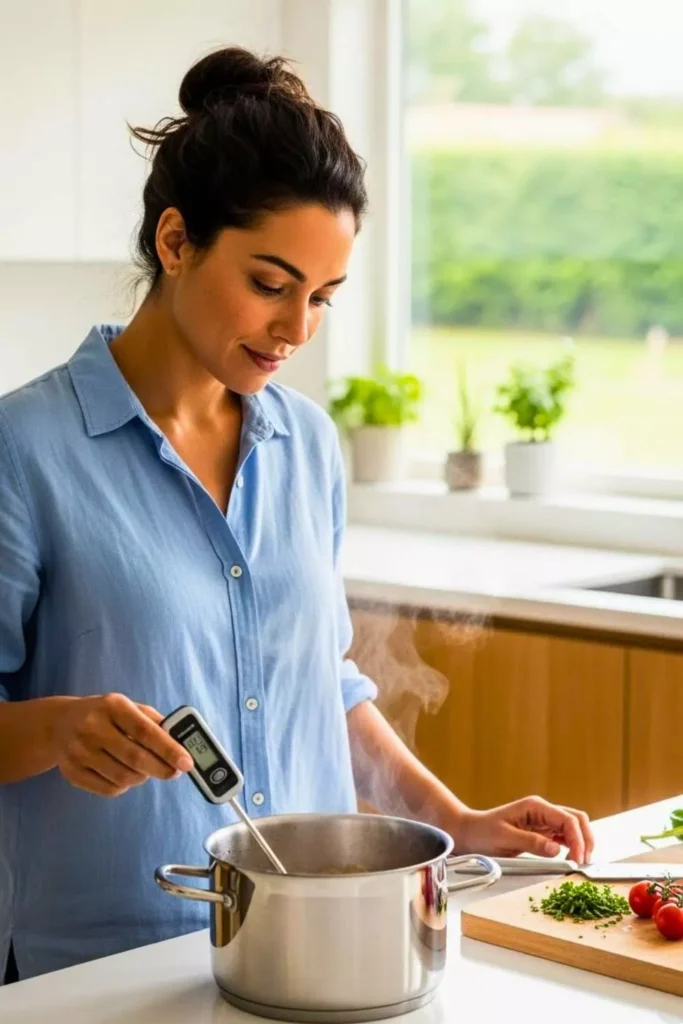
This balance is why professional kitchens rely heavily on thermometers rather than visual cues alone. Proper temperature ensures food is safe while still retaining its best texture and flavor.
How Temperature Shapes Texture
Temperature directly affects how proteins, starches, and fats behave during cooking. When heat is too high, proteins tighten rapidly, squeezing out moisture and making food tough.
When heat is controlled and gradual, food cooks evenly and stays tender.
Slow cooking is a perfect example of temperature working in your favor. Tough cuts of meat become soft and rich as collagen slowly breaks down into gelatin.
In contrast, delicate foods like fish and eggs require lower heat to maintain their soft, desirable texture. The right temperature allows ingredients to reach their ideal structure without damage.
Flavor Development Depends on Heat
Many of the flavors we associate with great cooking are created by heat-driven chemical reactions.
Browning, roasting, and deep savory notes only appear when food reaches certain temperatures. If the heat is too low, food remains pale and bland.
If it’s too high, flavors burn before they develop fully.
This is why techniques like searing followed by gentler cooking are so effective.
High heat creates flavor on the surface, while moderate heat finishes the interior without drying it out. Proper temperature control is essential for building depth and complexity in food.
Ideal Internal Cooking Temperatures (Food Safety Guide)
| Food Type | Safe Internal Temperature |
|---|---|
| Poultry (chicken, turkey) | 165°F / 74°C |
| Ground meats | 160°F / 71°C |
| Whole cuts of beef, pork, lamb | 145°F / 63°C (with rest) |
| Fish | 145°F / 63°C |
| Eggs | Fully set yolk and white |
This table highlights why temperature accuracy matters more than cooking time alone.
Moisture Control and Juiciness
Moisture loss is largely a temperature issue. High heat forces moisture out quickly, while gentle heat allows food to retain its natural juices.
This is especially important for lean proteins, baked goods, and sauces.
When food is cooked at the right temperature, moisture evaporates at a controlled rate, preserving tenderness and preventing dryness.
In sauces and dairy-based dishes, excessive heat can cause separation or curdling, ruining texture and appearance.
Baking Requires Precision
Baking is one area where temperature leaves almost no room for error. Yeast activation, gluten development, and fat melting all occur within specific temperature ranges.
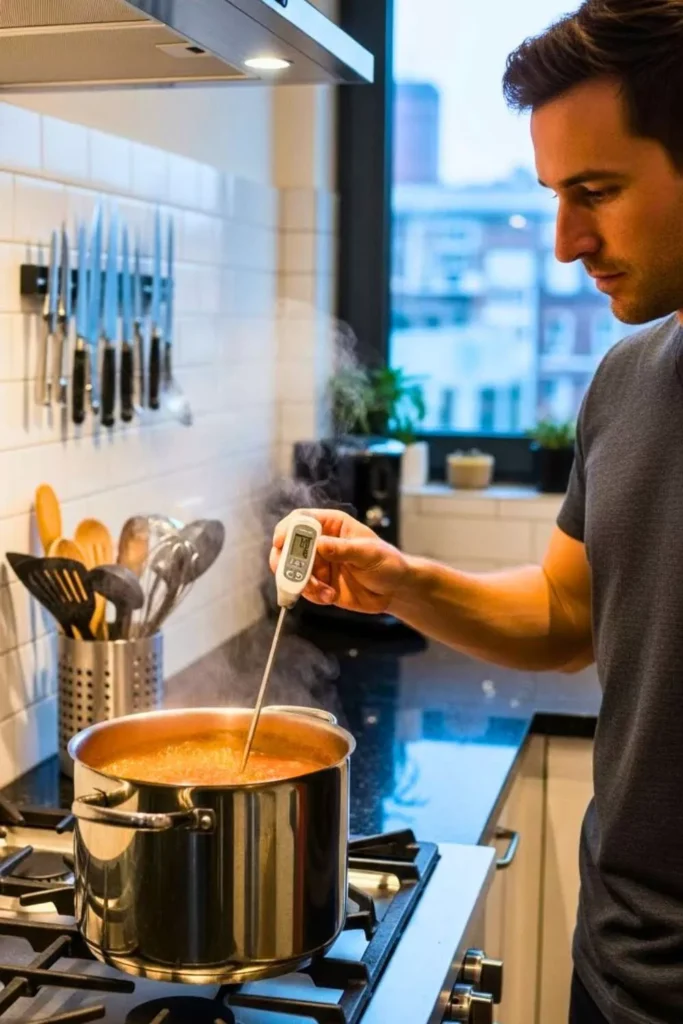
Even a small temperature difference can affect how bread rises, how cakes set, or how cookies spread.
This is why preheating the oven is essential and why many bakers rely on oven thermometers rather than built-in settings.
In baking, temperature is not a suggestion—it’s a rule.
The Importance of Resting and Carryover Heat
Cooking doesn’t stop the moment food is removed from the heat. Internal temperatures continue to rise briefly due to carryover cooking.
Resting food allows heat to stabilize and juices to redistribute evenly.
Skipping this step can result in dry meat and uneven textures, even if everything else was done correctly. Resting is the final temperature control step that completes the cooking process.
Key Benefits of Proper Temperature Control
- Improves food safety and reduces health risks
- Creates better texture and moisture retention
- Enhances flavor development and browning
- Ensures consistent, repeatable results
Conclusion
Cooking temperature matters because it influences every aspect of food—from safety and texture to flavor and presentation.
It’s not just about how long you cook something, but how hot and how steadily you apply heat.
By learning to control temperature rather than relying on guesswork, you gain precision, confidence, and better results in the kitchen.