Watching a cake rise beautifully in the oven only to sink as it cools can be extremely frustrating. Cake collapse is not random or bad luck—it is the result of structural failure during baking or cooling.
Cakes rely on a delicate balance of air, moisture, heat, and structure. When that balance is disturbed, the cake cannot support itself and collapses.
Understanding the science behind cake structure is the key to consistently successful baking.
How Cake Structure Forms During Baking
When a cake enters the oven, several processes happen at the same time. Air and steam expand, causing the batter to rise.
Proteins from eggs and flour begin to coagulate, while starches gelatinize, forming a stable internal framework.
Fats melt, and sugars dissolve, contributing to tenderness and moisture.
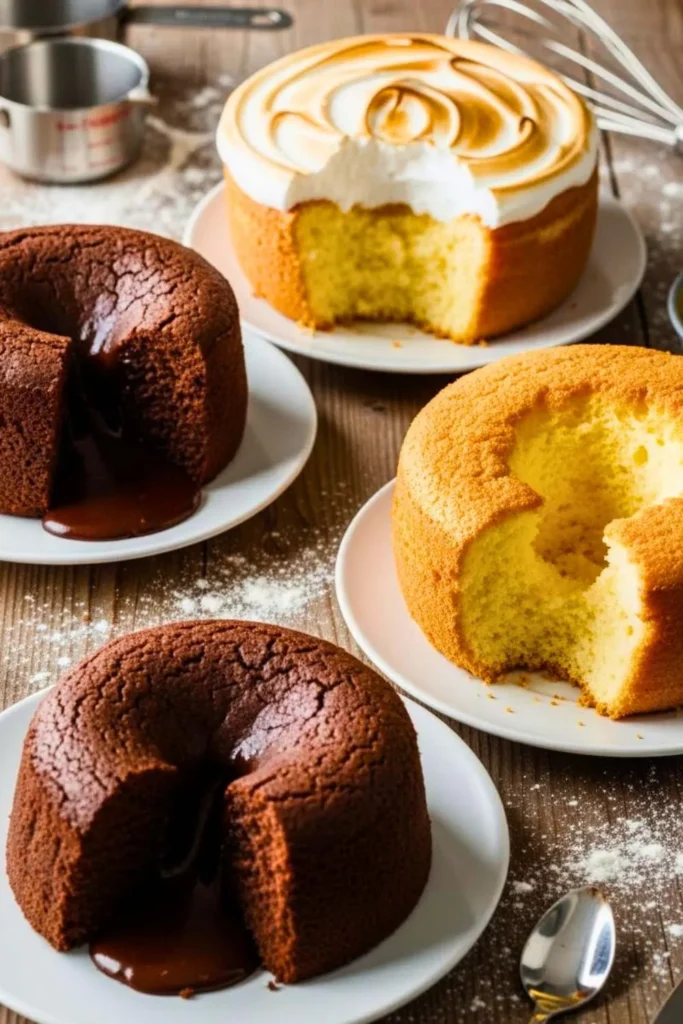
If the structure sets before the cake has finished rising, the cake may crack or dome. If the structure sets too late, the cake rises and then collapses because it cannot support the trapped gases.
Collapse occurs when expansion and setting are out of sync.
The Main Reasons Cakes Collapse
Most cake collapses come from a small group of avoidable mistakes:
- Underbaking, where the center of the cake never fully sets
- Too much leavening, causing the cake to rise rapidly and then fall
- Incorrect oven temperature, leading to uneven setting
- Overmixing, which weakens the cake’s internal structure
- Opening the oven door too early, releasing heat and steam
These issues all result in the same problem: a cake that expands before it has the strength to hold its shape.
Baking Mistakes and Their Effects
| Baking Issue | What Happens | Final Result |
|---|---|---|
| Underbaking | Center remains soft and unstable | Cake sinks after cooling |
| Excess leavening | Cake rises too quickly | Structure collapses |
| Oven too hot | Outside sets too fast | Center falls inward |
| Oven too cool | Cake never sets properly | Dense or sunken cake |
| Overmixing | Gluten becomes overdeveloped | Weak, collapsing crumb |
Ingredient Balance and Its Role
The balance of ingredients plays a major role in cake stability. Sugar and fat tenderize cakes, but too much of either can weaken the structure.
Excess sugar slows protein setting, while too much fat prevents proper crumb formation.
This is why cakes that are heavily modified or overloaded with syrups, fillings, or extra butter are more likely to sink.
Leavening agents must also be carefully measured.
Baking powder and baking soda are powerful, and even a small excess can cause the cake to rise beyond its structural limits.
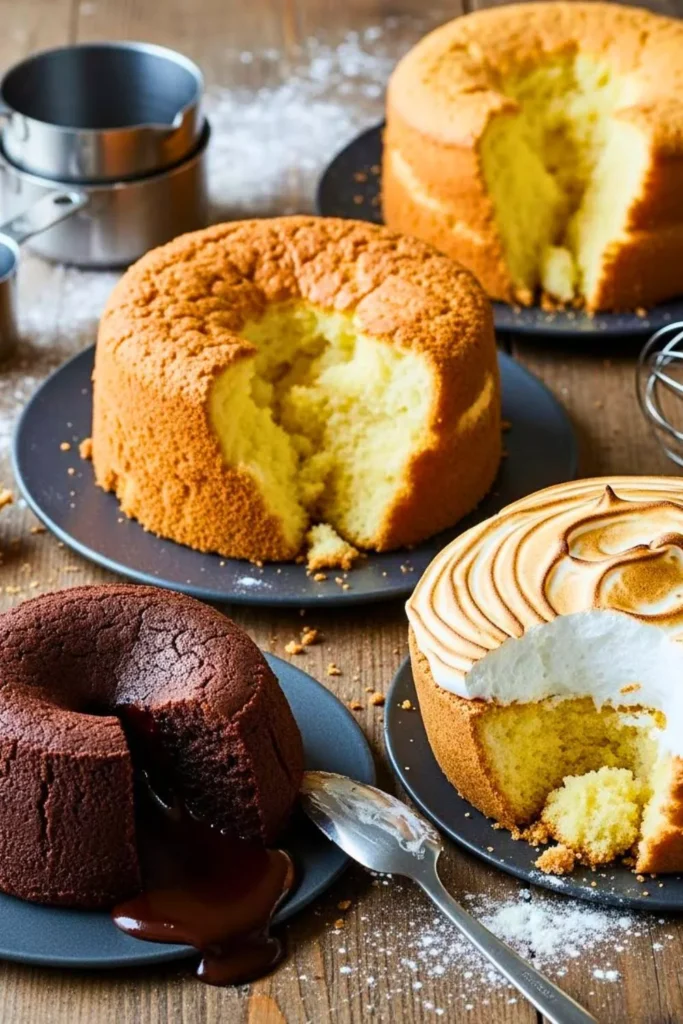
Oven Behavior and Timing
Many collapsed cakes are the result of oven-related issues rather than the recipe itself. Home ovens often run hotter or cooler than indicated, which affects how quickly the cake sets.
Opening the oven door too early introduces a sudden temperature drop, stopping the rise before the structure is firm.
Cakes are especially vulnerable during the first two-thirds of baking.
During this time, the internal framework is still forming, and any disturbance can lead to collapse later.
Cooling Matters More Than You Think
Even a perfectly baked cake can collapse if it is cooled improperly. Removing a cake from the oven too early or placing it in a drafty area can cause rapid temperature changes.
As steam escapes quickly, the internal structure contracts and sinks.
Allowing the cake to rest briefly in the pan helps it stabilize before turning it out onto a wire rack. Patience during cooling is just as important as precision during baking.
Final Thoughts
Cakes collapse because their internal structure fails to support expansion.
This failure almost always comes from underbaking, poor temperature control, ingredient imbalance, or mixing errors.
Once you understand how cakes rise and set, preventing collapse becomes straightforward.
Successful baking isn’t about luck—it’s about timing, balance, and understanding how heat transforms batter into structure.
Master those principles, and sunken cakes will become a thing of the past.